Insights on 5G, cloud-native telecom and network APIs from the Slicce team.
The Developer Experience Gap
Most telecom companies talk about opening their network.
Very few ask, "Would a developer actually want to build on it?"
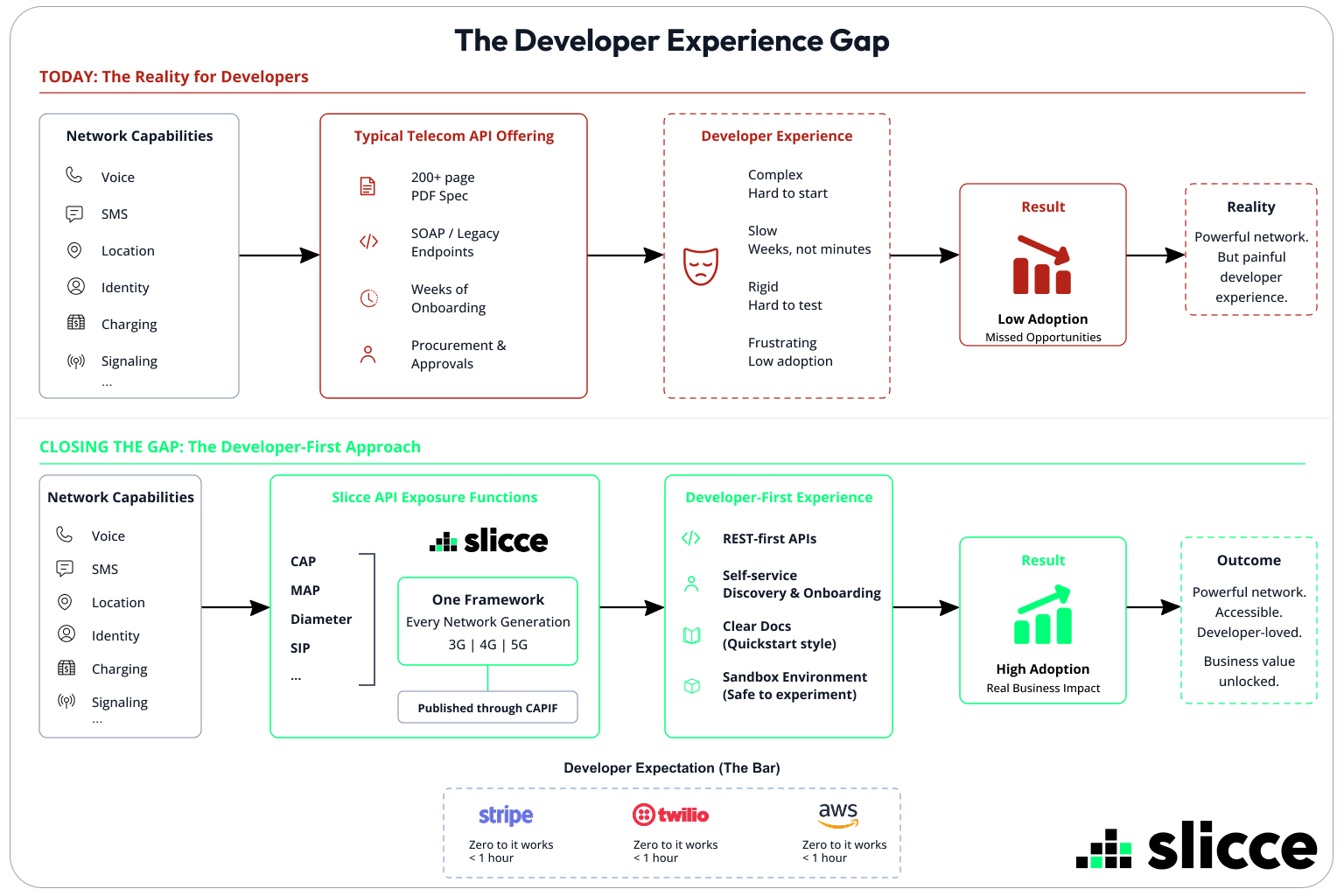
Here's the disconnect. Operators invest millions in network APIs. Then they hand developers a 200-page PDF spec, a SOAP endpoint, and a 6-week onboarding process.
October 7, 2026
Most telecom companies talk about opening their network. Very few ask, "Would a developer actually want to build on it?"
Here's the disconnect. Operators invest millions in network APIs. Then they hand developers a 200-page PDF spec, a SOAP endpoint, and a 6-week onboarding process.
Compare that to Stripe. Or Twilio. Or AWS. A developer can go from zero to "it works" in under an hour.
Telecom has the most powerful infrastructure on earth—voice, SMS, location, identity, charging, and signaling—all real-time, all carrier-grade. But if the developer experience is painful, none of that matters.
What closing the DX gap actually requires:
→ REST-first interfaces, not protocol translations disguised as APIs.
→ Self-service discovery and onboarding—not procurement cycles.
→ Documentation that reads like a quickstart guide, not a 3GPP specification.
→ Sandbox environments where developers can break things without filing a change request.
The operators who win the API economy won't be the ones with the most capabilities exposed. They'll be the ones developers actually choose to build on.
At Slicce, this is what our API Exposure Functions are built for. We turn CAP, MAP, Diameter, and SIP (the full depth of 3G, 4G, and 5G interfaces) into clean REST APIs, published through CAPIF. One framework. Every network generation. Developer-ready from day one. And in that same spirit, we designed NRD-AF, our low-code engine, to give teams a way to compose those APIs into a new service in days, not weeks.
Because the network was always powerful. It just wasn't accessible.
The Telecom Skills Crisis Nobody Is Talking About
The people who built your SS7 network are retiring.
The people who can replace them don't want to work in telecom.
This is the quiet crisis behind every operator's transformation roadmap.
September 8, 2026
The people who built your SS7 network are retiring.
The people who can replace them don't want to work in telecom.
This is the quiet crisis behind every operator's transformation roadmap.
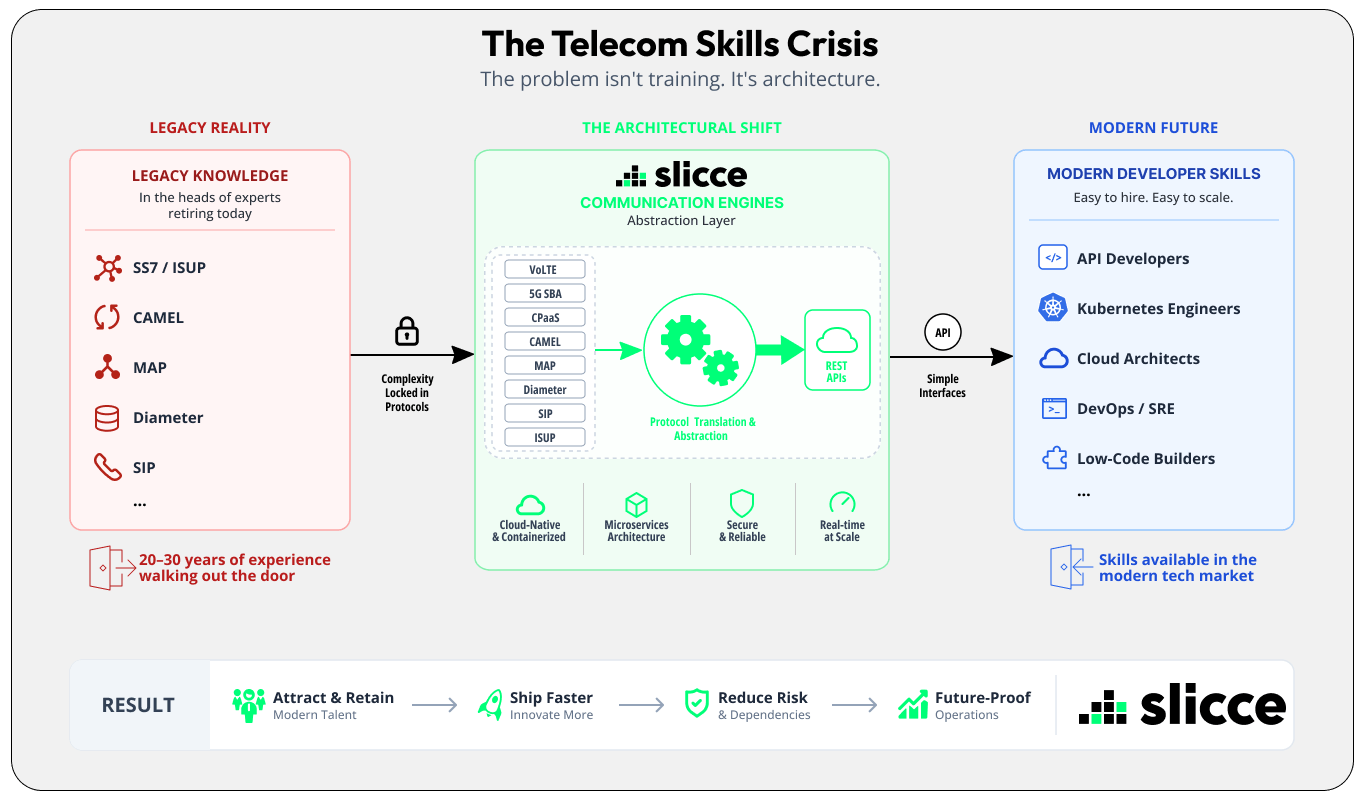
Legacy telecom knowledge (CAMEL, MAP, Diameter, SIP, ISUP) lives in the heads of engineers who've been in the industry for 20-30 years. When they leave, that knowledge leaves with them. In 2026, 52% of organizations struggle to hire and retain network engineers, up from 26% in 2022. And more than a quarter of working engineers plan to retire within five years.
Meanwhile, the engineers operators need to attract cloud architects, Kubernetes specialists, and API developers, who have dozens of offers from tech companies paying more, moving faster, and shipping daily.
This isn't a training problem. It's a design problem.
The answer isn't "teach cloud engineers SS7." It's building abstraction layers that make telecom complexity invisible to modern developers:
→ REST APIs over legacy protocols, so you need API developers, not protocol experts. → Containerized network functions, so you need Kubernetes skills, not proprietary platform knowledge. → Native integration with cloud communication platforms (Twilio, Telnyx, Vonage), so your team works with tools they already know.
But the skills crisis isn't only about legacy. It's also about the speed of adoption for next-generation technologies. VoLTE, 5G Service-Based Architecture, and cloud-native IMS: operators need to deploy these now, not wait until they've retrained their entire workforce.
This is the architectural bet behind everything we build at Slicce. Our communication engines encapsulate legacy protocol complexity (CAMEL, MAP, Diameter, ISUP) behind cloud-native microservices with REST interfaces, while simultaneously enabling modern capabilities: VoLTE, 5G SBA, and native integration with CPaaS platforms. Your next hire doesn't need to know SS7 to modernize. And they don't need years of training to deploy next-generation services.
Modernize the legacy. Adopt the new. With the same platform.
The operators who survive the skills transition won't be the ones who found more SS7 engineers. They'll be the ones who stopped needing them.
Your architecture is your talent strategy.
The 2G/3G Sunset Paradox
Operators are shutting down 2G and 3G networks.
But millions of subscribers, IoT devices, and revenue streams still depend on them.
This is the sunset paradox: you can't afford to keep it running, and you can't afford to turn it off.
July 20, 2026
Operators are shutting down 2G and 3G networks. But millions of subscribers, IoT devices, and revenue streams still depend on them.
This is the sunset paradox: you can't afford to keep it running, and you can't afford to turn it off.
The standard playbook — force-migrate everyone to 4G/5G — sounds clean on a slide. In practice:
→ IoT devices with 10-year battery life can't be reflashed overnight. → Prepaid subscribers in rural markets don't have 4G handsets. → CAMEL-based VAS that generate real revenue have no native 5G equivalent. → Roaming agreements still rely on MAP/SS7 signaling.
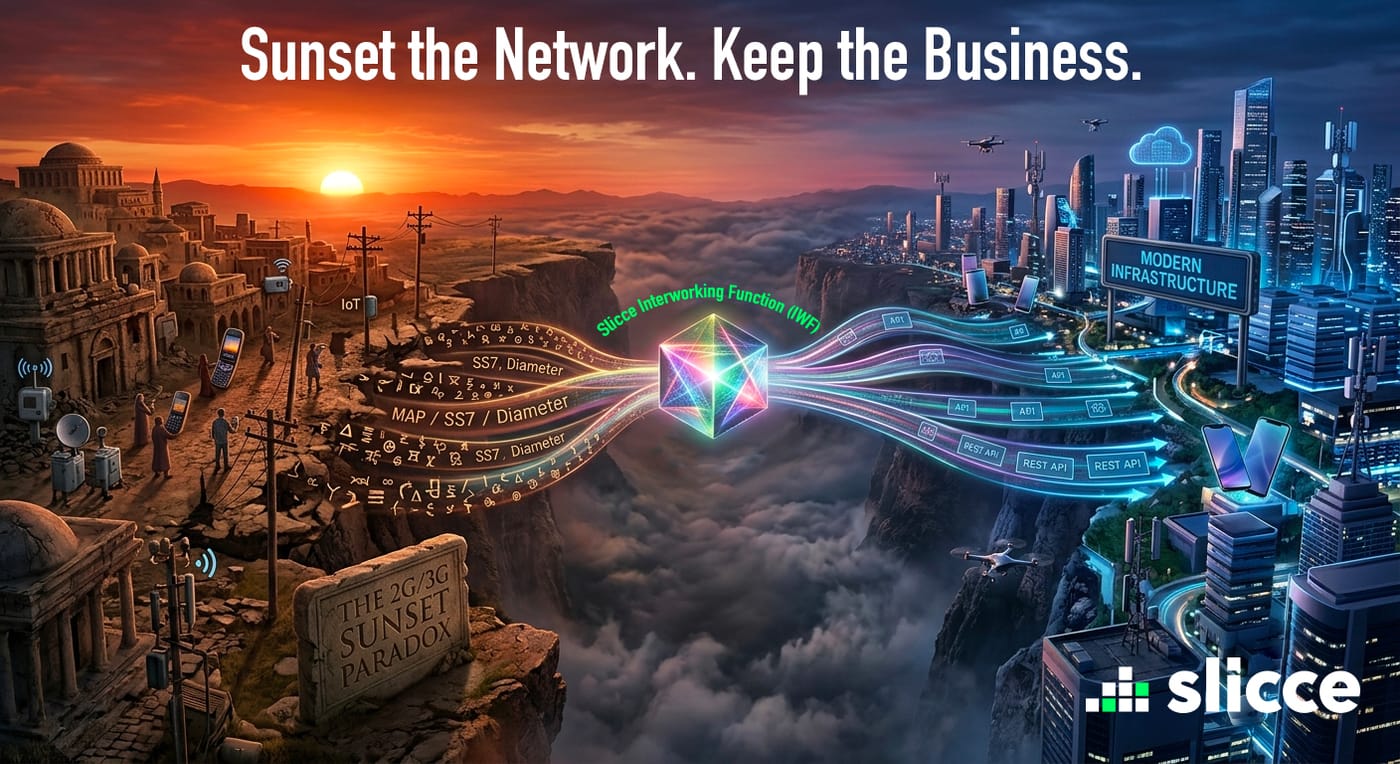
The operators handling this well aren't choosing between "keep" and "kill." They're using interworking — protocol conversion layers that let legacy services run on modern infrastructure without rebuilding them from scratch.
Sunset the hardware. Keep the service logic. Interwork the protocols.
That's how you retire a network generation without retiring the revenue it generates.
This is one of the core problems Slicce was designed to solve. Our interworking functions: Charging IWF, IP Multimedia IWF, Short Message IWF, convert legacy telecom protocols into modern, cloud-native interfaces. No re-engineering. No "big bang" migration. And our API Exposure Functions keep CAMEL, MAP, and Diameter services alive through REST APIs — ready for the next decade, on infrastructure that actually scales.
Sunset the network. Keep the business.
Vendor Lock-in Is the Real Legacy Problem
Everyone talks about legacy networks.
Nobody talks about legacy contracts.
In 2026, the most expensive technical debt in telecom isn't a 15-year-old HLR. It's the vendor relationship that makes replacing it impossible.
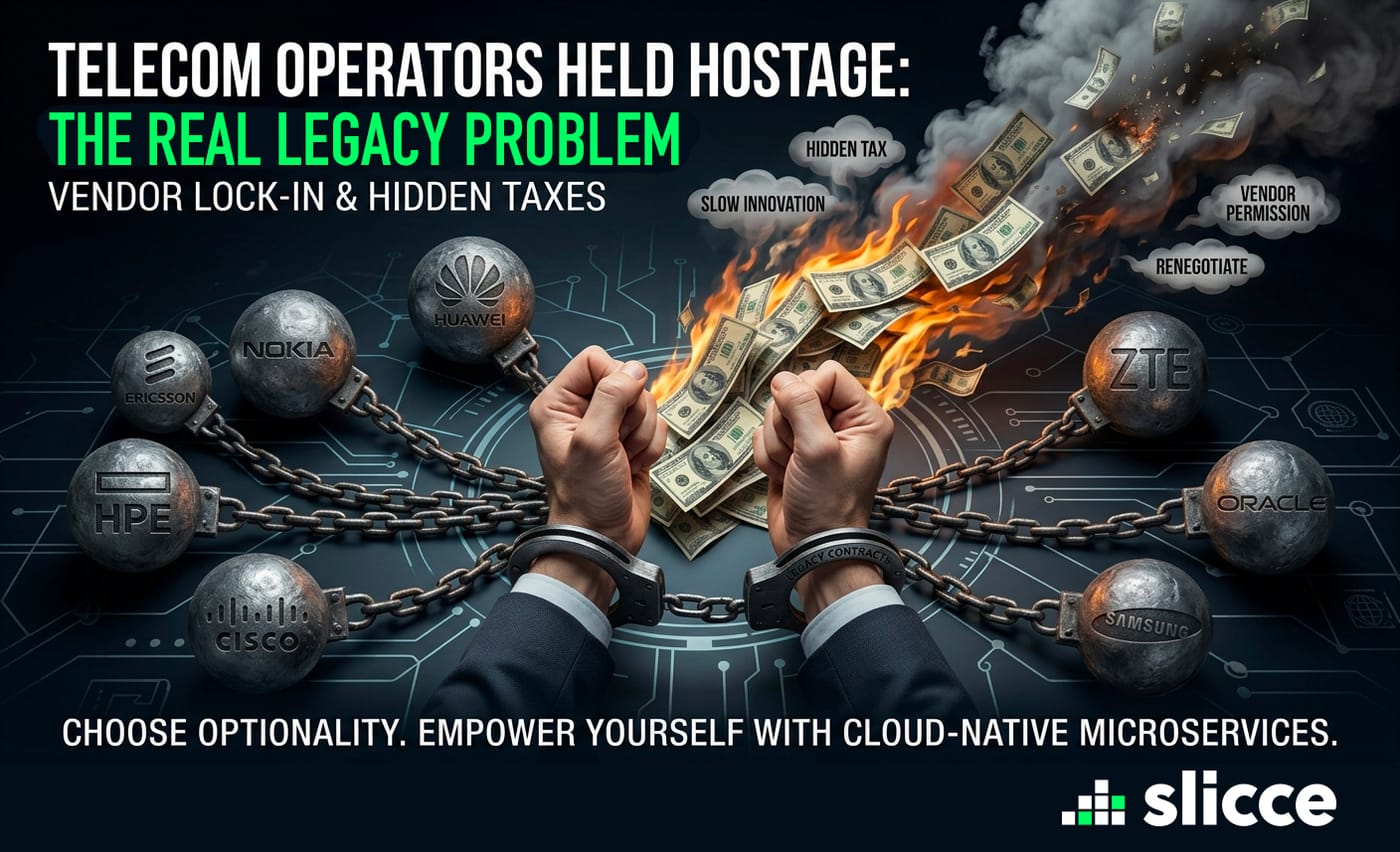
You want to add a new charging model? Wait for your vendor's roadmap. You need a protocol conversion? Pay for a custom integration. You want to deploy on a different cloud? Renegotiate your license.
This is the hidden tax on telecom innovation.
July 14, 2026
Everyone talks about legacy networks. Nobody talks about legacy contracts.
In 2026, the most expensive technical debt in telecom isn't a 15-year-old HLR. It's the vendor relationship that makes replacing it impossible.
You want to add a new charging model? Wait for your vendor's roadmap. You need a protocol conversion? Pay for a custom integration. You want to deploy on a different cloud? Renegotiate your license.
This is the hidden tax on telecom innovation.
The shift to cloud-native microservices isn't just about performance or scalability. It's about optionality:
→ Self-contained network functions that run anywhere — AWS, on-prem, hybrid — without vendor permission.
→ Standard interfaces (CAPIF, REST) that let you swap components without rewriting the stack.
→ Pay-per-use models that align cost with actual traffic, not with how many CPUs your contract says you bought.
The most strategic decision an operator can make today isn't choosing the best vendor. It's choosing an architecture where no single vendor can hold them hostage.
This is exactly why we built Slicce the way we did. Self-contained microservices. No platform dependency. Run on AWS, on-prem, or hybrid; your choice, not ours. Standard interfaces. CAPIF-native. Swap, compose, and extend without asking permission.
Because the best vendor relationship is the one you stay in by choice, not by constraint.
Optionality isn't a feature. It's a survival strategy.
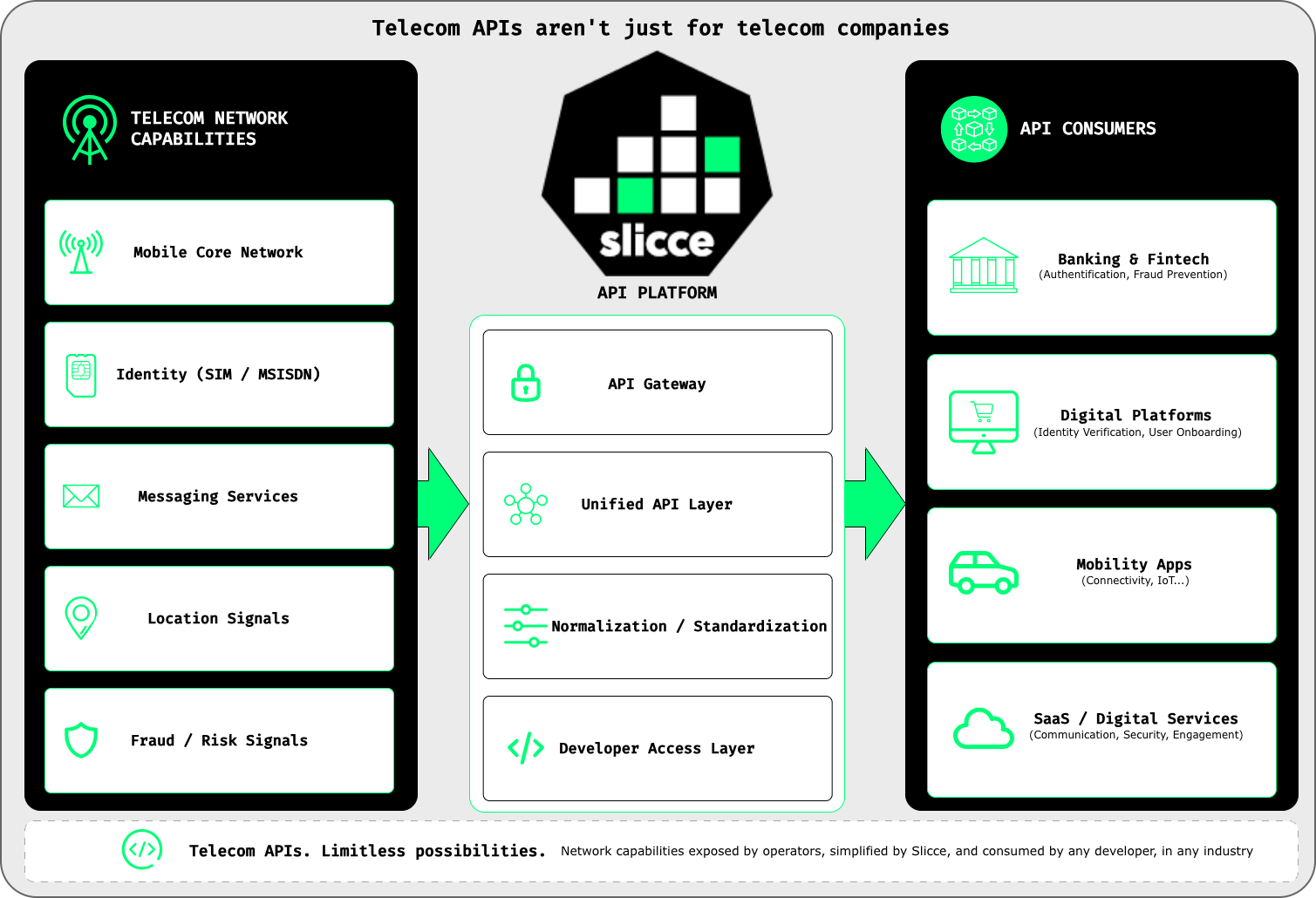
𝗧𝗲𝗹𝗲𝗰𝗼𝗺 𝗔𝗣𝗜𝘀 𝗮𝗿𝗲𝗻’𝘁 𝗷𝘂𝘀𝘁 𝗳𝗼𝗿 𝘁𝗲𝗹𝗲𝗰𝗼𝗺 𝗰𝗼𝗺𝗽𝗮𝗻𝗶𝗲𝘀.
One misconception still comes up surprisingly often: that telecom APIs are only relevant to mobile operators.
In reality, the businesses creating the most value with network capabilities often come from completely different industries. Banks use them to strengthen authentication, digital platforms rely on them to verify phone numbers, and online services leverage them to reduce fraud. Any business that depends on mobile connectivity can benefit from telecom network capabilities.
At Slicce, our mission is to make telecom APIs easy to discover, access, and consume. We believe developers should be able to integrate network capabilities without needing deep telecom expertise. And for organizations that want to accelerate adoption, our team can provide guidance from the first API call to production.
The more accessible telecom APIs become, the more innovation they will unlock far beyond the telecom industry.
July 6, 2026
One misconception still comes up surprisingly often: that telecom APIs are only relevant to mobile operators.
In reality, the businesses creating the most value with network capabilities often come from completely different industries. Banks use them to strengthen authentication, digital platforms rely on them to verify phone numbers, and online services leverage them to reduce fraud. Any business that depends on mobile connectivity can benefit from telecom network capabilities.
At Slicce, our mission is to make telecom APIs easy to discover, access, and consume. We believe developers should be able to integrate network capabilities without needing deep telecom expertise. And for organizations that want to accelerate adoption, our team can provide guidance from the first API call to production.
The more accessible telecom APIs become, the more innovation they will unlock far beyond the telecom industry.
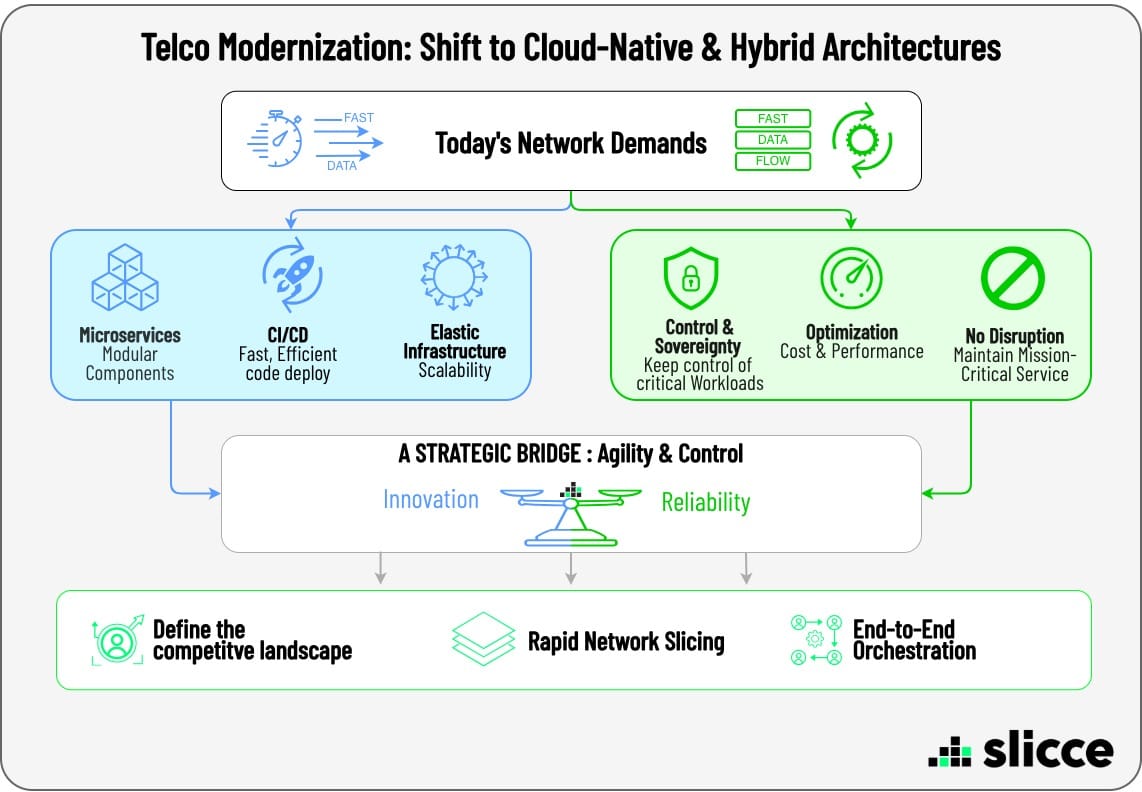
Why are telcos accelerating their shift toward cloud‑native and hybrid architectures?
The answer is simple: the legacy model can’t keep up with today’s network demands.
Telcos need scalability, automation, and real‑time adaptability to deliver next‑generation services. Cloud‑native architectures bring exactly that—microservices, CI/CD, and elastic infrastructure that evolves at the pace of customer expectations.
But the real world isn’t “all cloud” or “all on‑prem”. That’s why hybrid models are becoming the new standard. They let operators modernize without disrupting mission‑critical workloads, while optimizing cost, performance, and sovereignty.
At Slicce, we see this shift every day. Operators want agility without losing control, innovation without compromising reliability. Hybrid cloud‑native architectures are the bridge.
The telcos that embrace this transformation now will define the competitive landscape of the next decade.
June 16, 2026
The answer is simple: the legacy model can’t keep up with today’s network demands.
Telcos need scalability, automation, and real‑time adaptability to deliver next‑generation services. Cloud‑native architectures bring exactly that—microservices, CI/CD, and elastic infrastructure that evolves at the pace of customer expectations.
But the real world isn’t “all cloud” or “all on‑prem”. That’s why hybrid models are becoming the new standard. They let operators modernize without disrupting mission‑critical workloads, while optimizing cost, performance, and sovereignty.
At Slicce, we see this shift every day. Operators want agility without losing control, innovation without compromising reliability. Hybrid cloud‑native architectures are the bridge.
The telcos that embrace this transformation now will define the competitive landscape of the next decade.
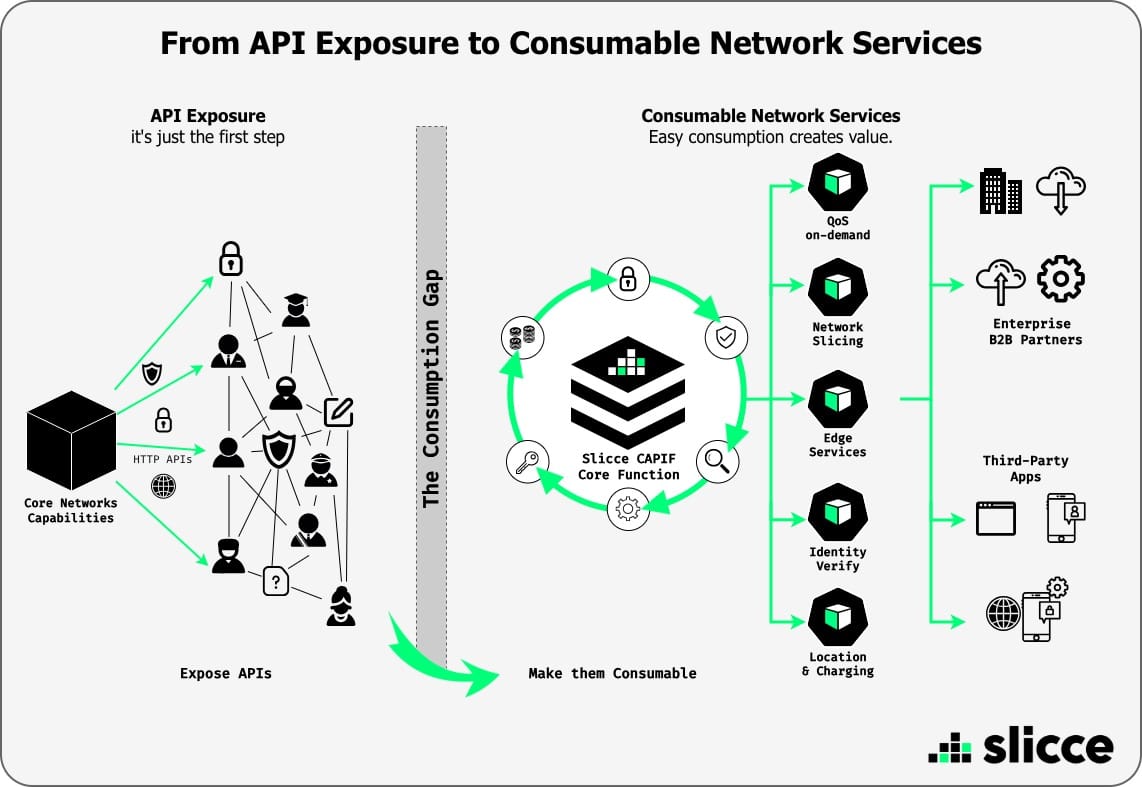
From API Exposure to Consumable Network Services
Over the past few months, I've noticed something interesting in discussions around Network APIs.
Most conversations focus on exposure: how to publish APIs, secure them, standardize them, and make them available to external consumers.
But very few discussions focus on what happens next.
Because exposing an API is only the first step.
The real challenge starts when an enterprise wants to consume that capability.
How does it discover it?
How is access controlled?
How are policies enforced?
How is usage tracked?
How is it charged?
This is where CAPIF (Common API Framework) becomes important.
June 2, 2026
Over the past few months, I've noticed something interesting in discussions around Network APIs.
Most conversations focus on exposure: how to publish APIs, secure them, standardize them, and make them available to external consumers.
But very few discussions focus on what happens next.
Because exposing an API is only the first step.
The real challenge starts when an enterprise wants to consume that capability.
How does it discover it?
How is access controlled?
How are policies enforced?
How is usage tracked?
How is it charged?
This is where CAPIF (Common API Framework) becomes important.
CAPIF was designed to address many of the challenges associated with network exposure by providing a standardized framework for API discovery, security, authorization, governance, and interoperability across vendors and domains.
But solving exposure is only part of the equation.
For operators, the real opportunity lies in transforming exposed network capabilities into services that enterprises can easily discover, consume, and pay for.
Whether we're talking about QoS on demand, network slicing, edge services, identity verification, location services, or charging capabilities, success depends on making those capabilities accessible through a consistent and scalable consumption model.
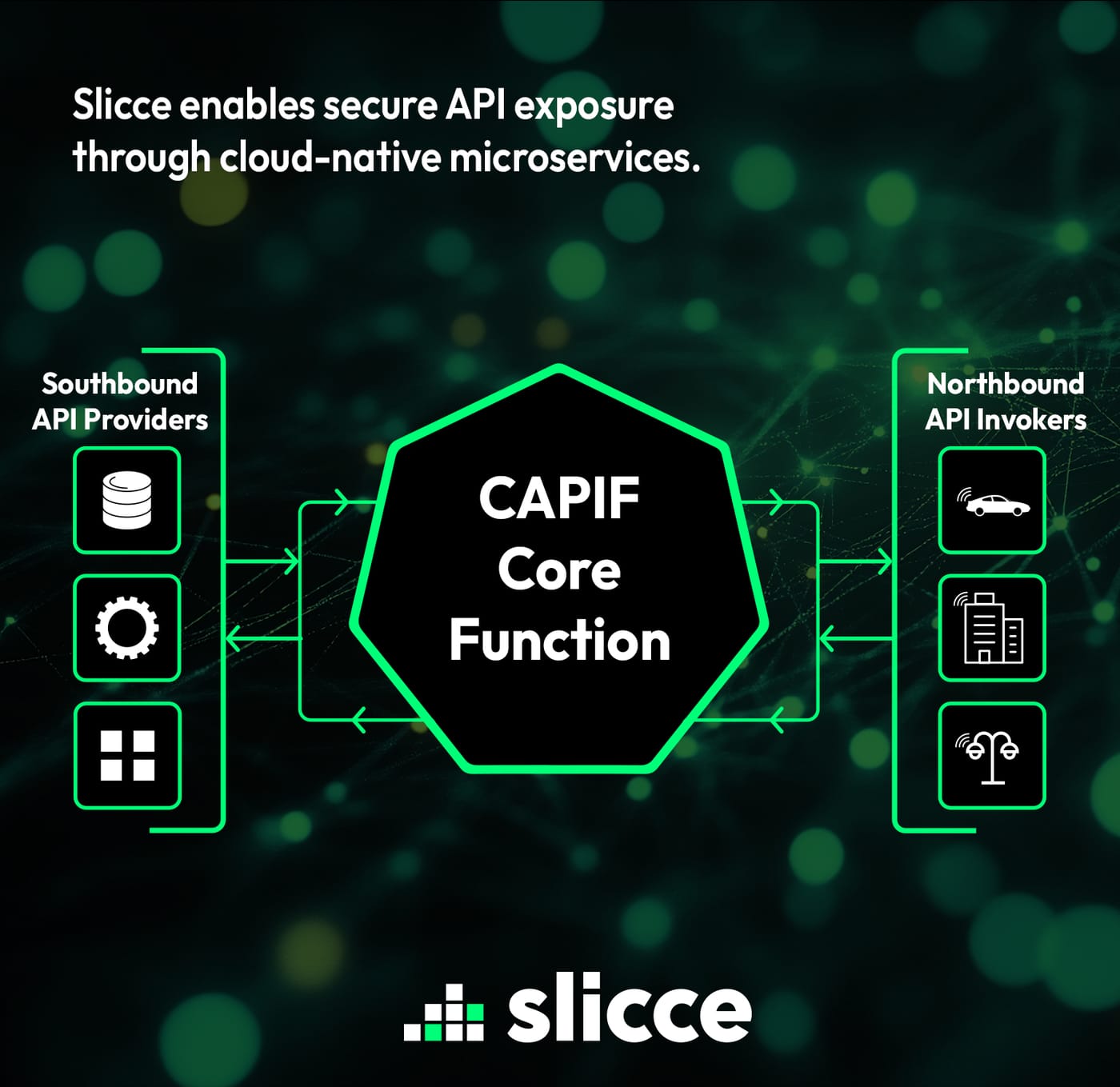
This is where Slicce's CAPIF Core Function comes in.
It helps operators:
• Standardize API consumption across heterogeneous environments
• Secure exposure through orchestration and policy enforcement
• Integrate charging and monetization models
• Scale efficiently through cloud-native architectures
The operators that will capture the most value from Network APIs won't necessarily be those exposing the most capabilities.
They will be the ones making those capabilities the easiest to consume.
Because exposing APIs creates possibilities.
Making them consumable creates business.
Interested in how CAPIF-based architectures can be translated into real B2B monetization opportunities? We'd be happy to share our perspective.
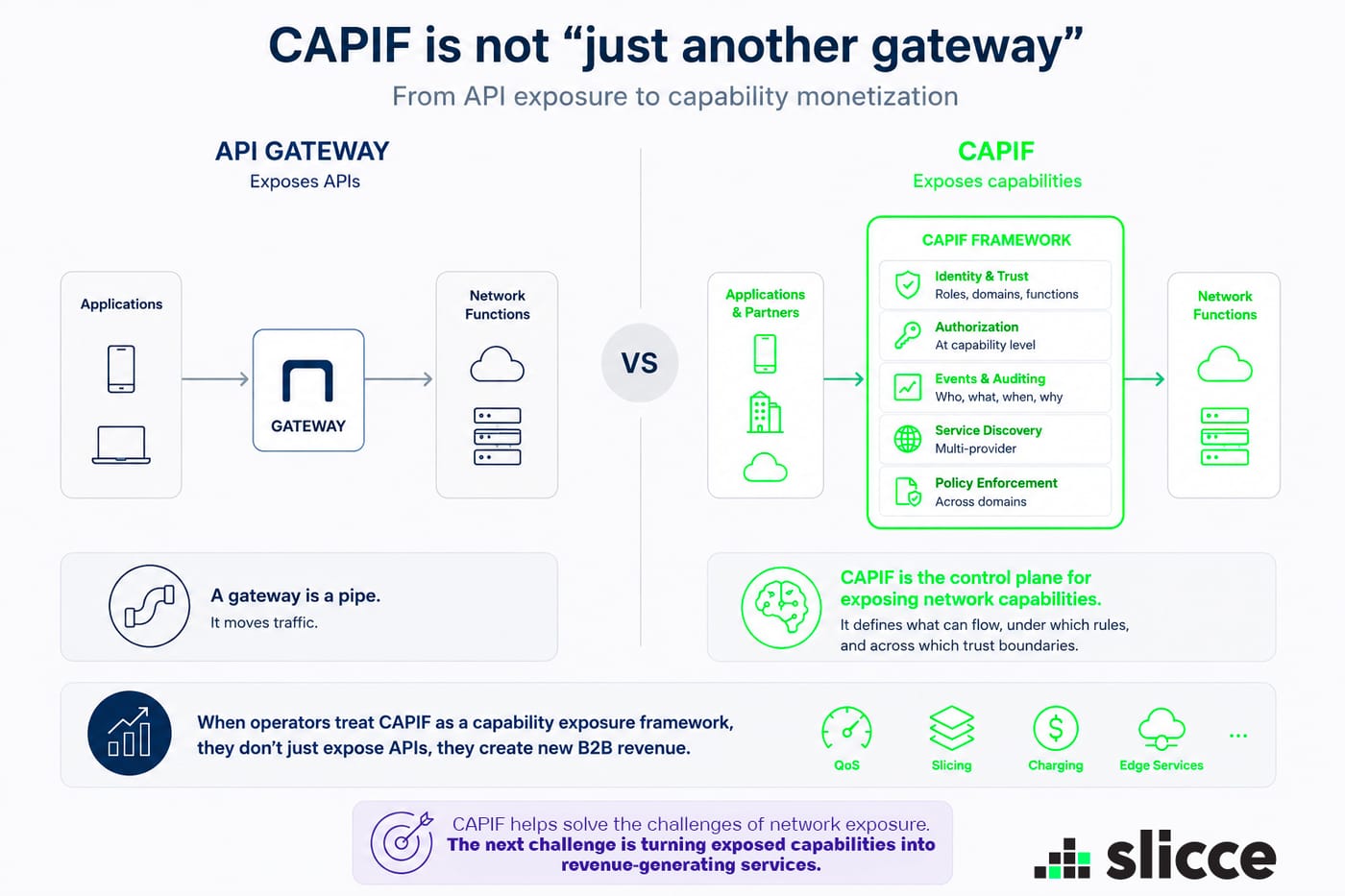
Why CAPIF is not “just another gateway”
Most engineers outside of telco think CAPIF is basically an API gateway with 3GPP stickers on it.
It isn’t. And treating it like one means missing much of its value.
A gateway exposes APIs.
CAPIF governs how network capabilities are exposed, secured, controlled, and monetized.
May 26, 2026
Most engineers outside of telco think CAPIF is basically an API gateway with 3GPP stickers on it.
It isn’t. And treating it like one means missing much of its value.
A gateway exposes APIs. CAPIF governs how network capabilities are exposed, secured, controlled, and monetized.
Here’s what makes it fundamentally different:
Identity Federation — CAPIF doesn’t just authenticate apps; it authenticates roles, domains, and network functions across multi‑vendor environments.
Authorization at capability level — Not “can you call this API?” but “can you invoke this specific network behavior under these conditions?”
Event exposure & auditing — CAPIF tracks who accessed what, when, and why. This is mandatory when APIs control QoS, mobility, or slices.
Multi‑provider service discovery — CAPIF isn’t a single gateway; it’s a federated registry for capabilities across operators.
Policy enforcement across domains — CAPIF ensures that exposure policies follow the capability, not the vendor.
Charging & monetization readiness — Network capabilities can be associated with usage tracking, charging, and commercial models, turning technical assets into consumable services.
In other words:
CAPIF controls how network capabilities become consumable services.
And that changes the business model entirely.
Treating CAPIF as a gateway means exposing APIs. Treating it as a capability exposure framework means creating the foundation for monetizable services built on QoS, slicing, charging, edge services, and other network capabilities. While CAPIF addresses many of the challenges associated with secure network exposure, the real opportunity lies in transforming those exposed capabilities into scalable B2B offerings that generate new revenue streams. This is exactly the challenge we are working to operationalize with Slicce.
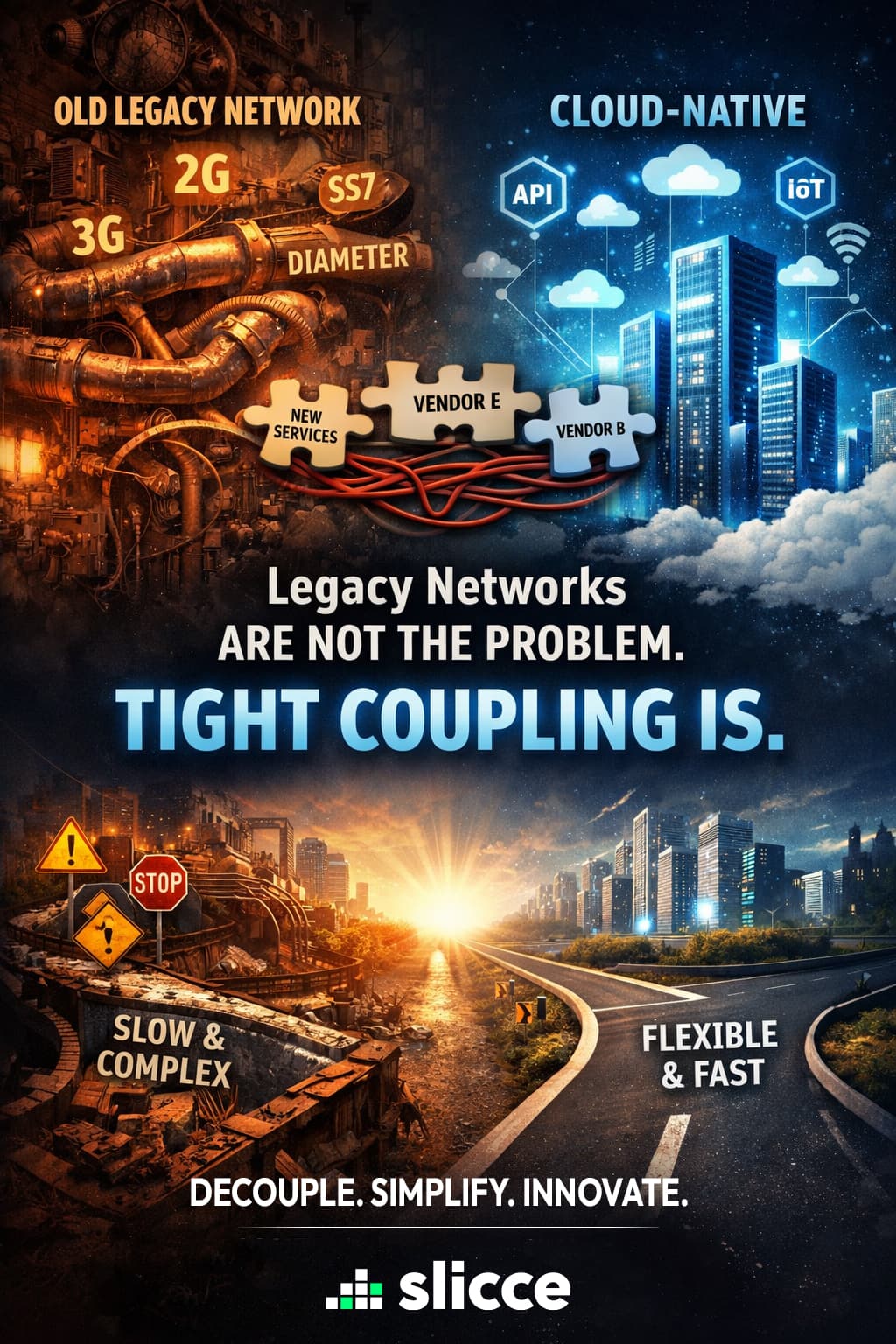
Legacy networks are not the problem. Tight coupling is.
In today’s telecom world, MVNEs and operators aren’t struggling because their networks are old.
They’re struggling because every new service, generation, or vendor integration adds layers of complexity that slow down innovation and increase operational costs.
May 12, 2026
In today’s telecom world, MVNEs and operators aren’t struggling because their networks are old. They’re struggling because every new service, generation, or vendor integration adds layers of complexity that slow down innovation and increase operational costs.
At Slicce, we help operators decouple service innovation from legacy constraints: enabling multi-generation interworking, cloud-native scaling, and API exposure without touching the existing core network.
The result? Faster launches, lower OPEX, and the freedom to experiment with new capabilities, all while keeping your legacy network running smoothly.
Legacy isn’t the bottleneck. Tight coupling is.
Curious how this works in practice? Let’s discuss how modern interworking layers can simplify your network strategy.
Building a Security Perimeter for the API‑Driven Network
Everyone talks about API exposure, Open Gateway, CAMARA, and network programmability.
But very few talk about the security foundation required to expose telco-grade capabilities safely.
At Slicce, we’ve spent years engineering a Common API Framework Core Function where security isn’t an add‑on, it’s embedded in the architecture itself.....
April 21, 2026
Everyone talks about API exposure, Open Gateway, CAMARA, and network programmability.
But very few talk about the security foundation required to expose telco-grade capabilities safely.
At Slicce, we’ve spent years engineering a Common API Framework Core Function where security isn’t an add‑on, it’s embedded in the architecture itself.
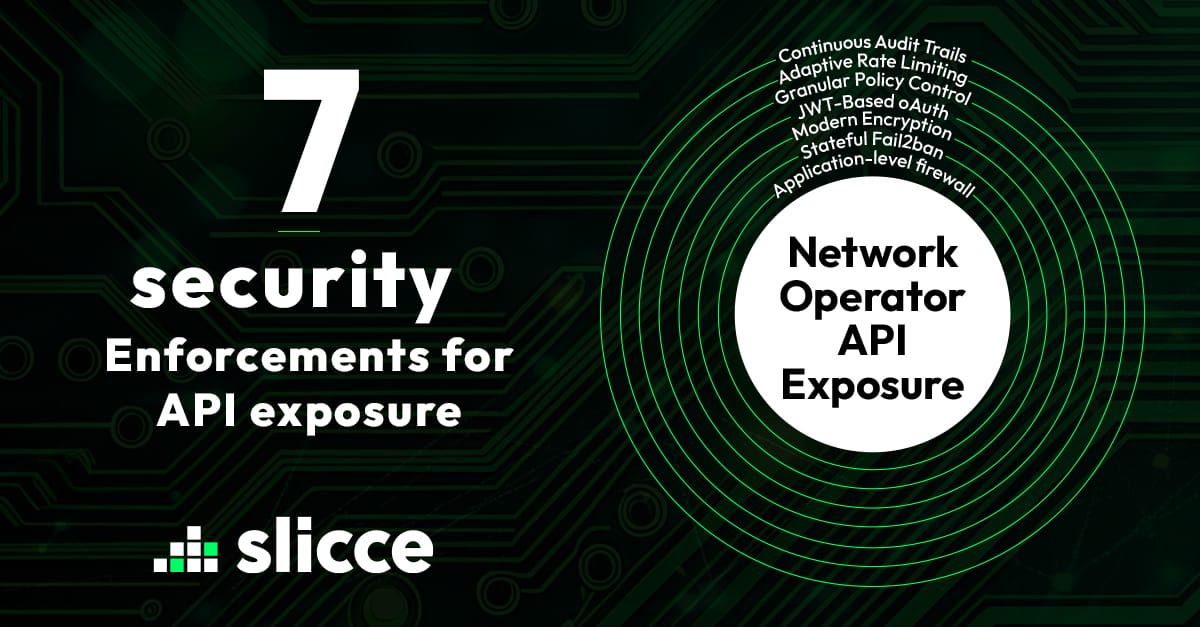
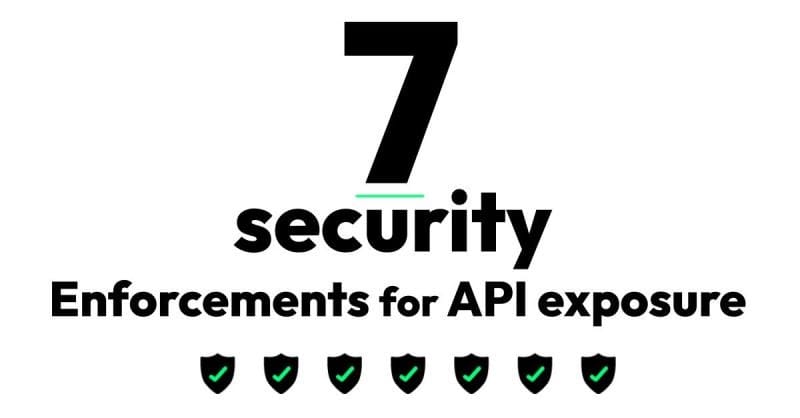
Here are the 7 security primitives that form the backbone of our exposure layer:
1) Application‑level firewall Real‑time protection against API‑driven DoS patterns based on logic, not just volume.
2) Stateful Fail2ban Automatic mitigation of repetitive or abnormal request bursts targeting the same API type.
3) Modern Encryption HTTP/2 with TLS 1.3 - no downgrade paths, no legacy compromises.
4) JWT-Based oAuth Short‑lived, verifiable, tamper‑resistant authentication for every exposed capability.
5) Granular Policy Control Selective access to API subsets, aligned with roles, partners, or enterprise tiers.
6) Adaptive Rate Limiting Adaptive throttling based on request volume per user, per client, per defined time window… Preventing abusive patterns while keeping legitimate traffic flowing smoothly.
7) Continuous Audit Trails Deep inspection of logs to detect anomalies, correlate events, and strengthen exposure posture.
API exposure is only as strong as the security model behind it.
Modernizing VoLTE services with ISC‑AEF and API‑driven programmability
With 2G and 3G now fully sunset, VoLTE has become the default voice layer, and IMS the foundation for all real‑time communication services. Operators are no longer just delivering voice, they are looking for ways to differentiate, automate, and innovate on top of IMS....
February 9, 2026
With 2G and 3G now fully sunset, VoLTE has become the default voice layer, and IMS the foundation for all real‑time communication services. Operators are no longer just delivering voice, they are looking for ways to differentiate, automate, and innovate on top of IMS.
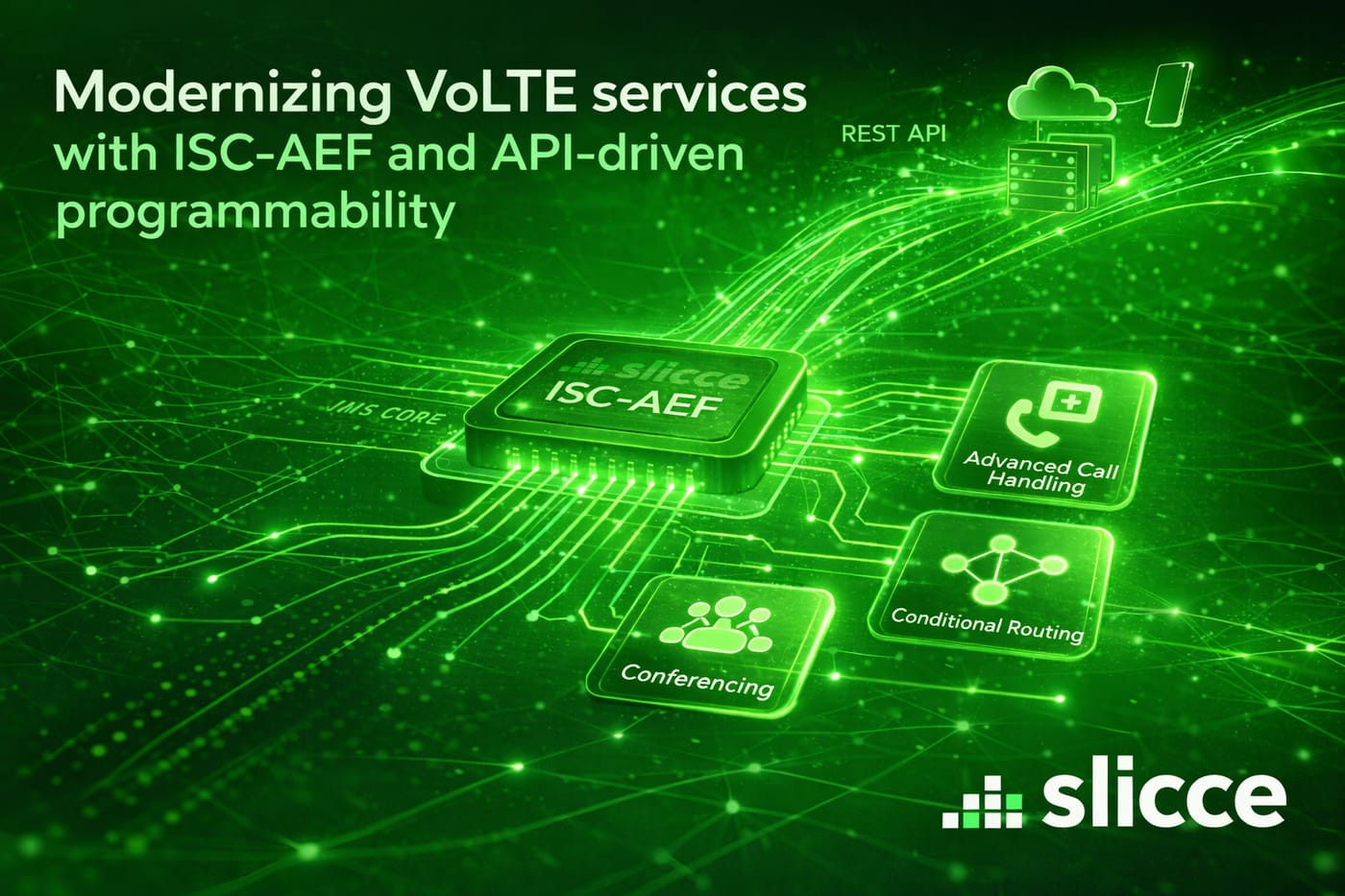
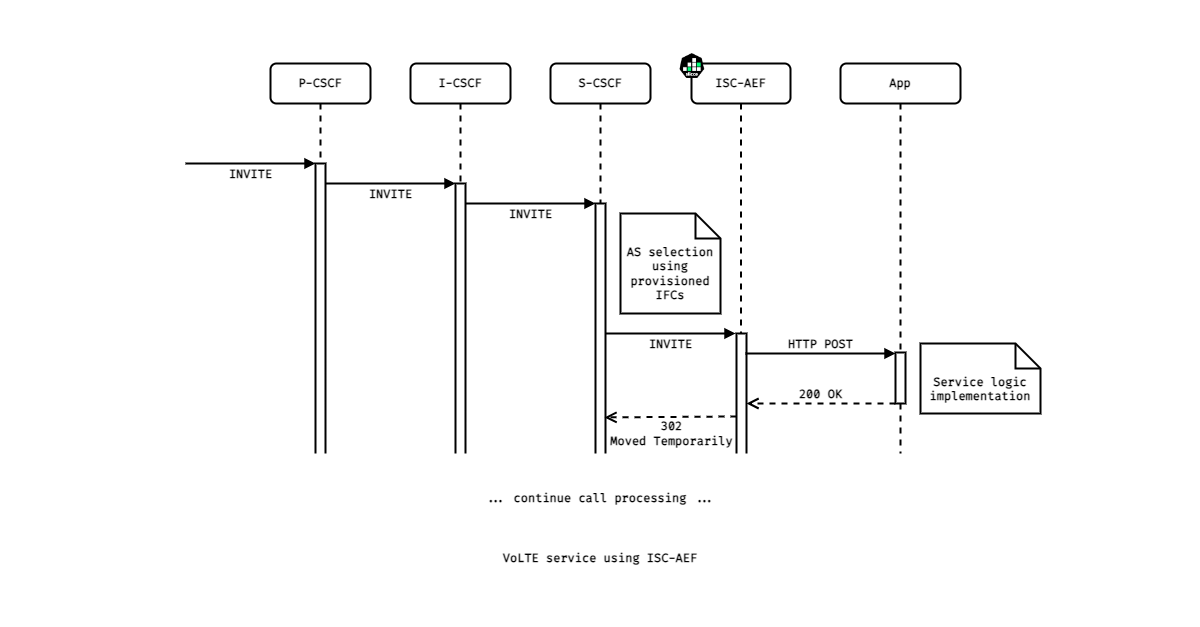
But VoLTE on its own doesn’t offer much flexibility. To deliver value‑added services such as call screening, conditional routing, conferencing, or advanced call handling, operators rely on two key IMS mechanisms:
The ISC interface, which connects the IMS core to Application Servers and enables service logic execution.
The IFC rules, which determine when and how these Application Servers should be invoked for each subscriber or session.
Together, ISC and IFC allow operators to enrich VoLTE with intelligent, subscriber‑aware services, but traditionally, this required complex, tightly coupled platforms.
This is where Slicce’s ISC‑AEF microservice brings a modern, cloud‑native, API‑centric approach:
Implements the ISC interface and exposes it through REST APIs, making VoLTE service logic accessible to modern applications.
Integrates seamlessly with CAPIF‑CF and aligns with Slicce NRD‑AF, enabling low‑code designers, graphical orchestrators, and automation platforms to consume VoLTE capabilities through standardized APIs.
Supports multiple protocols: SIP, Diameter, HTTP, allowing operators to build flexible, multi‑channel service logic.
Provides a clean, developer‑friendly environment for creating, testing, and deploying new voice services quickly.
By exposing VoLTE capabilities through modern APIs, Slicce transforms IMS from a static core into a programmable platform that enables operators to:
Integrate voice features into broader digital ecosystems.
Automate provisioning and service activation.
Support third‑party innovation and enterprise‑specific logic.
Modernize legacy VAS without touching the IMS core.
As operators evolve their networks in 2026, programmability and exposure are becoming essential pillars of service innovation.
Slicce’s ISC‑AEF helps them modernize VoLTE, accelerate service creation, and unlock new business models — all while keeping IMS stable, compliant, and future‑proof.
Network Exposure: the silent engine of innovation
As we close out 2025, one thing has become crystal clear across the telecom industry: innovation no longer comes from technology alone, it comes from openness.
Openness to partners.
Openness to developers.
Openness to ecosystems.
Openness to use cases we couldn’t have imagined even two years ago, from real‑time network‑aware applications to AI‑driven services that react instantly to user context......
January 26, 2026
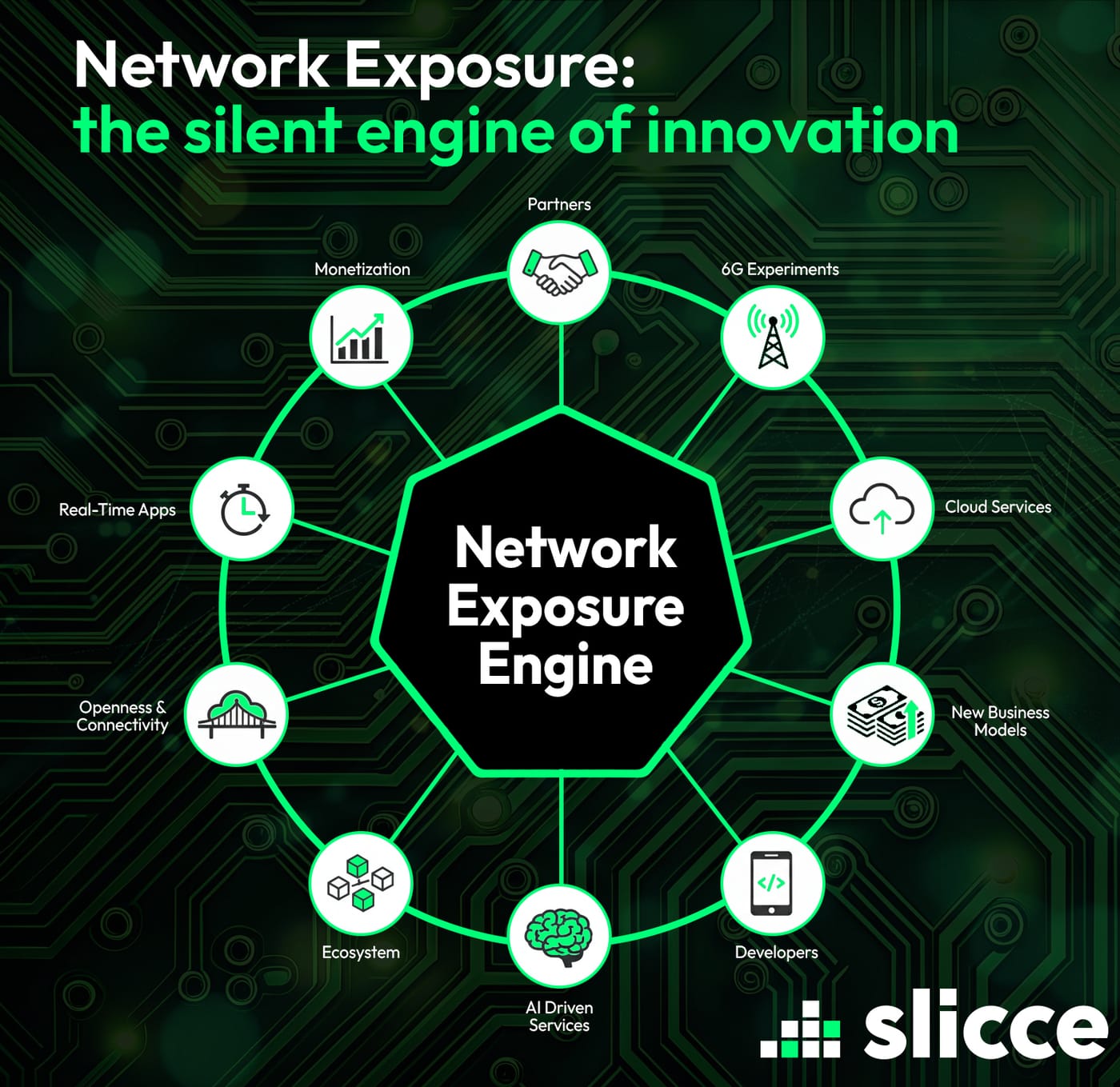
As we close out 2025, one thing has become crystal clear across the telecom industry: innovation no longer comes from technology alone, it comes from openness.
Openness to partners.
Openness to developers.
Openness to ecosystems.
Openness to use cases we couldn’t have imagined even two years ago, from real‑time network‑aware applications to AI‑driven services that react instantly to user context.
That’s exactly where Network Exposure has proven transformative, and where Slicce Solutions have played a decisive role in making exposure practical, secure, and scalable for operators.
With 5G SA now mainstream, API monetization accelerating, and early 6G experiments already shaping expectations, network exposure has shifted from a technical capability to a strategic differentiator.
Here’s why it matters more than ever:
It multiplies perspectives by bringing diverse players into the innovation loop, surfacing ideas no operator could generate alone.
It strengthens ideas through real‑world feedback that sharpens feasibility, desirability, and scalability.
It accelerates adoption, because services born in open ecosystems naturally gain trust, visibility, and traction.
In other words: the more exposed the network, the more fertile the innovation pipeline becomes.
Operators who embrace this shift aren’t just optimizing infrastructure, they’re building platforms.
They’re not just selling connectivity, they’re exposing capabilities. They’re not following the market, they’re shaping it.
And this is exactly the mission Slicce has supported throughout 2025: helping operators expose their network capabilities safely, consistently, and with the agility required to fuel new services and new business models.
Entering 2026, one truth has never been clearer: Innovation thrives not in isolation, but in connection — and Slicce is enabling that shift.
What challenges define the modern Telco
5G is deployed. Investments are massive. Expectations are high. Yet operators, established, virtual, or digital-native, face a new wave of challenges that go far beyond radio…
January 20, 2026
5G is deployed. Investments are massive. Expectations are high.
Yet operators, established, virtual, or digital-native, face a new wave of challenges that go far beyond radio upgrades.
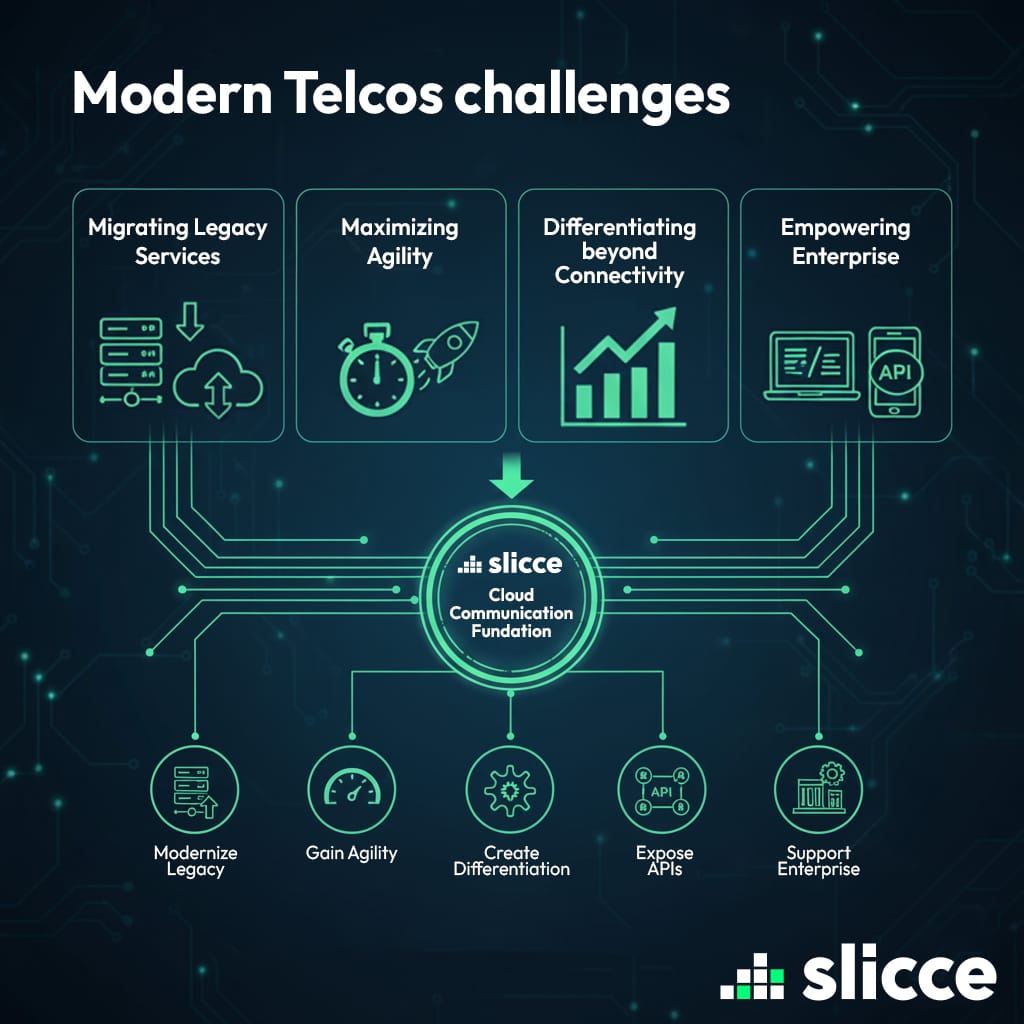
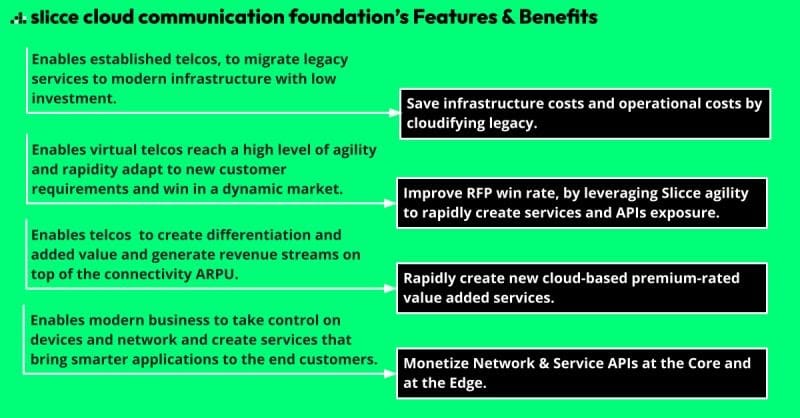
Here are four problem statements shaping the industry today, and the areas where Slicce's cloud communication foundation brings real impact:
1/ "I'm an established operator with decades of legacy services to migrate."
Budgets are tight, most CAPEX is locked into 5G and fiber, yet legacy voice and messaging workloads still need to be modernized, virtualized, and exposed through APIs, without disrupting millions of subscribers.
2/ "I'm a fast‑growing virtual operator and I need extreme agility."
MVNOs and digital brands must adapt in weeks, not months. They need programmable network capabilities, flexible service logic, and automation to stay competitive in a market that moves faster than traditional telco cycles.
3/ "I operate in a saturated market and I need differentiation beyond connectivity ARPU."
Pure connectivity is no longer enough. Operators must create value‑added services, enterprise features, and programmable capabilities that generate new revenue streams on top of the network.
4/ "As a digital‑first business, I need control over devices and network behavior."
Enterprises want smarter applications, real‑time interactions, and network‑aware services. They expect APIs, automation, and the ability to integrate telco capabilities directly into their digital workflows.
While much of the industry is currently focusing on this last challenge, through the 3GPP Network Exposure Function, the GSMA Open Gateway initiative, and the CAMARA project, these efforts address only one part of the transformation journey.
Operators still need to modernize legacy workloads, accelerate service creation, simplify operations, and build new revenue models on top of their networks.
And this is exactly where Slicce takes a broader view.
By providing a unified cloud communication foundation, Slicce helps operators:
Modernize and migrate legacy services.
Gain the agility needed to compete in fast‑moving markets.
Create differentiation beyond connectivity.
Expose programmable capabilities through APIs.
Support enterprise innovation with smarter, network‑aware services.
Slicce supports the full transformation journey, not just exposure, but modernization, agility, and differentiation.
Telecom didn't lose relevance. It lost velocity
For decades, operators built the most powerful infrastructures on earth. Reliable. Scalable. Mission-critical. And has believed that new "G's" would fix everything. Better radio.…
January 14, 2026
For decades, operators built the most powerful infrastructures on earth. Reliable. Scalable. Mission-critical. And has believed that new "G's" would fix everything. Better radio. More bandwidth. Lower latency.
Yet today, innovation is happening around the network, not within it.
Why?
Because networks were optimized for stability, while the market now rewards adaptability.
APIs changed software. Cloud changed infrastructure. AI is changing behavior.
But telecom is still too often asked to migrate, replace, or wait, instead of compose, expose, and evolve.
The next era of telco innovation won't come from another "G". It will come from making network capabilities programmable, accessible, and reusable, without breaking what already works.
Modernization without disruption. Innovation without massive rewrites. Differentiation beyond connectivity.
This is where cloud-native communication platforms redefine the rules: turning legacy assets into building blocks, networks into platforms, and operators into enablers of ecosystems.
The question is no longer "What comes after 5G?" The real question is: How fast can your network adapt when the next opportunity appears?
At Slicce, this is the transformation we enable, every day. Not by replacing the network, but by unlocking it. Not by waiting for the future, but by making it programmable. Not by adding complexity, but by exposing capabilities through a unified, cloud‑native foundation.
Not in years. Not in massive transformation programs. But incrementally, intelligently, and with immediate business impact. Because the future of telecom won't be defined entirely by technology.
It will be defined by how programmable, open, and agile operators choose to become.
And the ones who embrace that shift early… will shape the next generation of digital services.
Why migrate when you can integrate?
Legacy MSCs speak CAMEL (CAP). Modern OCSs expect Diameter (Ro). The solution looks simple: replace or upgrade every MSC to support Diameter. This is on the paper. What in…
December 16, 2025
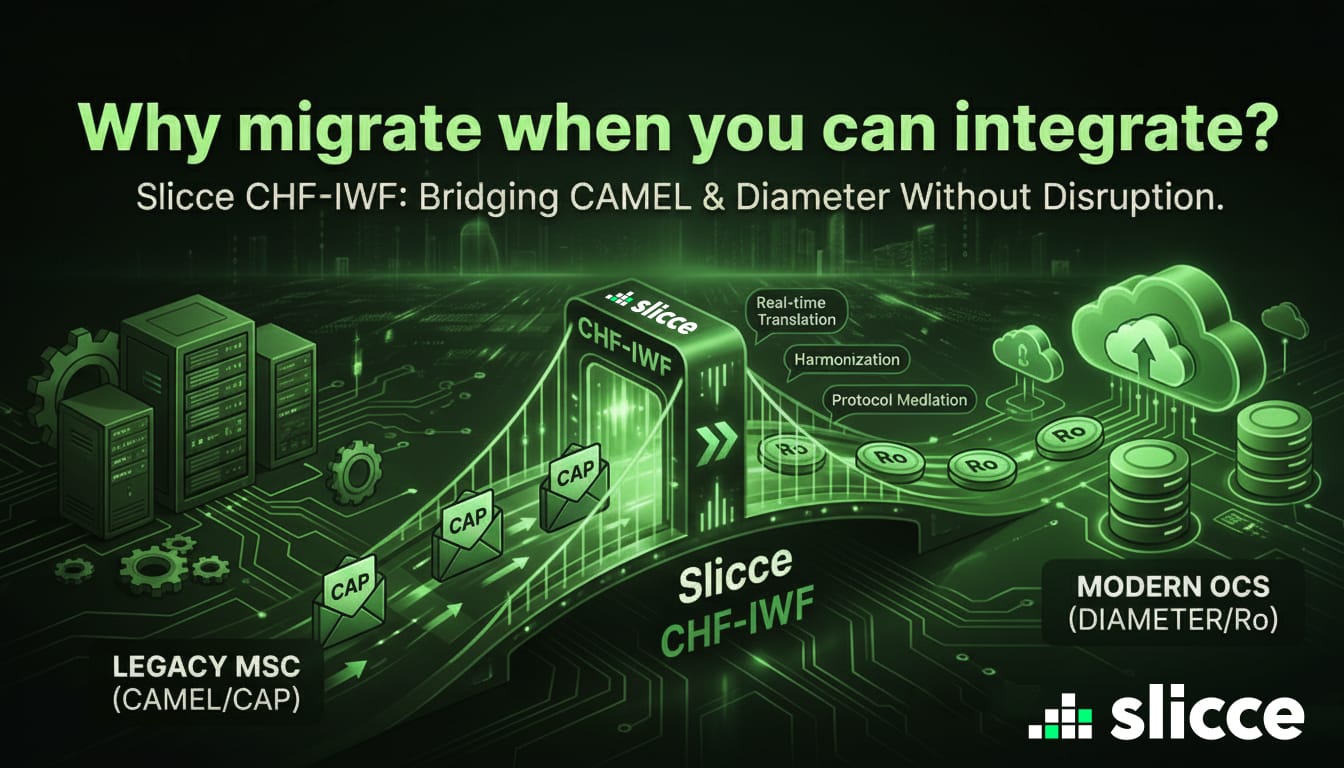
Legacy MSCs speak CAMEL (CAP). Modern OCSs expect Diameter (Ro). The solution looks simple: replace or upgrade every MSC to support Diameter. This is on the paper. What in reality? It could be a nightmare! Costly, risky, and disruptive for live networks. And let's be honest, nobody wants to explain to their CFO why a "simple protocol mismatch" turned into a multi‑million migration project!
Here's the smarter move: Slicce CHF‑IWF. Instead of tearing down what works, we bridge CAMEL and Diameter in real time. Think of it as a universal translator for charging flows — lean, precise, and built to keep your services running while your OCS evolves.
How is it working: The CHF‑IWF mediates between protocols seamlessly
Converts CAMEL charging requests into Diameter events
Supports INAP, CAMEL, Diameter, HTTP2 across fixed and mobile networks
Connects to any billing system via CAMEL or Diameter interfaces
Ensures real‑time balance checks, charge calculation, and fraud prevention for home and roaming users
In short: it harmonizes the charging logic between legacy services and modern OCSs, without forcing you into a disruptive migration.
Here's the real kicker: by avoiding massive migration costs, you preserve your cash flow, so when the next big infrastructure shift arrives (yes, we're looking at you, 6G… not here yet, but already knocking at the door like an impatient guest), you'll have the treasury to invest where it really matters. Instead of burning budget on protocol mismatches, you keep your powder dry for the upgrades that are truly essential. Modernize smarter today, be ready for a big tomorrow.
The 3 Levels of Programmable Wireless Slicce powers the programmable layer in between
Programmable wireless is transforming how devices and applications connect, from IoT and smart cities to vehicles and industrial automation. But not all programmability is equal.…
October 21, 2025
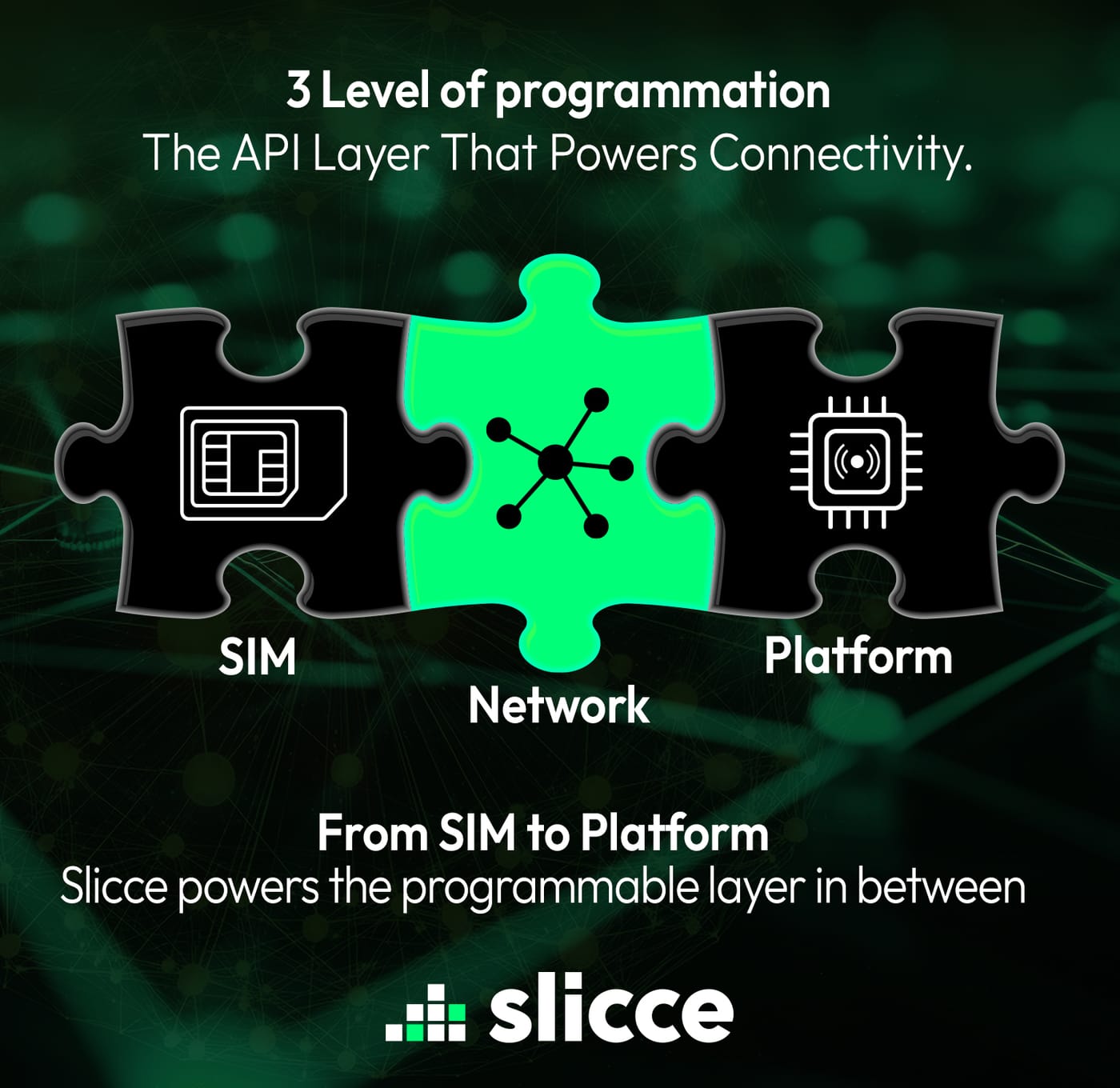
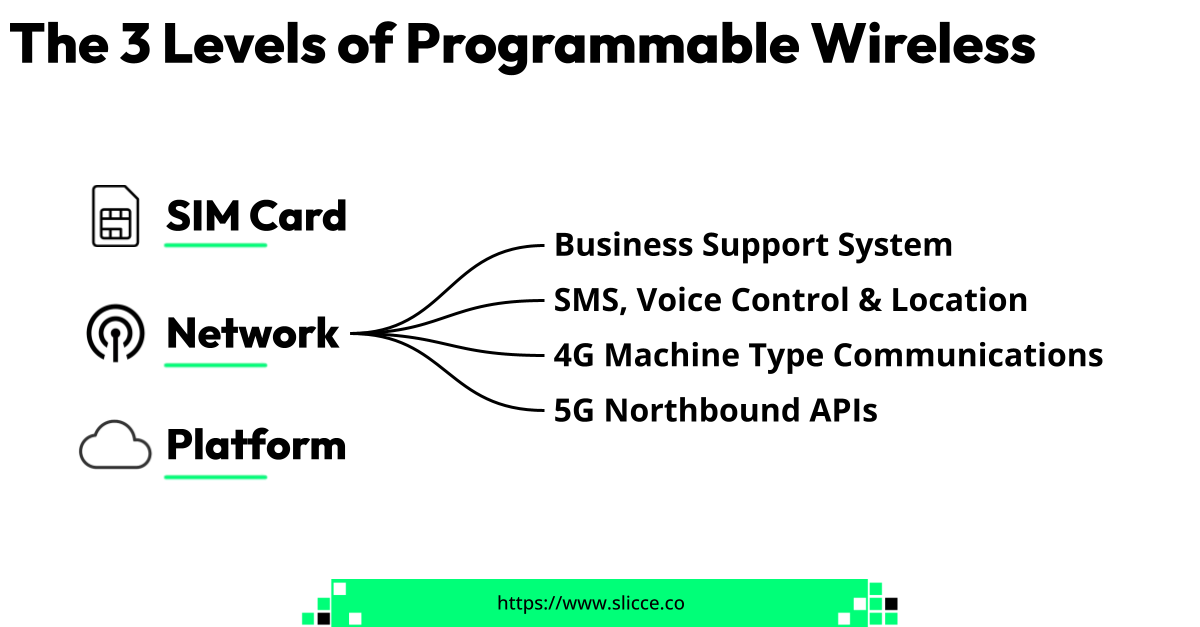
Programmable wireless is transforming how devices and applications connect, from IoT and smart cities to vehicles and industrial automation. But not all programmability is equal. The SIM level (Level 1), control is limited to operator selection and basic activation. The platform level (Level 3), hyperscalers aggregate and abstract connectivity. The real competitive frontier lies in Level 2 – the Network APIs, where operators can directly expose network intelligence and control to developers.
Level 2 programmable wireless, when exposed through APIs, enables true flexibility: not just activation or billing, but granular control over communication patterns, QoS, roaming, and even edge application integration. This is where differentiation and monetization for operators becomes possible — and where innovation for developers and IoT providers will accelerate. With Slicce's CAPIF Core Function, these APIs can be securely published, discovered, and monetized across domains.
Technical Description Level 2 can be broken into sub-levels:
While the first and second sub-levels of programmable wireless have become commodities, the real race now lies in standardizing the fourth (the 5G/3GPP-defined APIs) across operators. This is where differentiation happens, as telcos shift from exposing basic functions to offering programmable, monetizable capabilities. Slicce's cloud-native CAPIF Core Function enables this transformation by managing access control, rate limiting, real-time charging, and secure interoperability. It turns APIs into products, not just features, unlocking new value for developers, enterprises, and operators alike. The future of programmable wireless is being defined at this layer, and it's happening now.
Turning APIs into Revenue Streams in Telecom
Telecom operators have invested heavily in advanced network capabilities—QoS control, location, identity, slicing—but many of these assets remain under-monetized. Locked behind…
October 16, 2025
Telecom operators have invested heavily in advanced network capabilities—QoS control, location, identity, slicing—but many of these assets remain under-monetized. Locked behind proprietary interfaces or exposed in ways that don't align with modern developer ecosystems, they risk becoming cost centers instead of revenue drivers. APIs are the key to unlocking new value, yet monetizing them effectively remains a challenge: charge directly, offer them for free to boost other services, or find a strategic middle ground?
Monetizing network APIs starts with adopting standardized models—direct, indirect, or hybrid—each tailored to different business goals. The 3GPP Common API Framework (CAPIF) enhanced by Slicce provides the technical foundation for secure, partner-friendly exposure. Slicce builds on CAPIF with a cloud-native stack that gives operators the flexibility to choose and implement the monetization strategy that fits their market, partners, and ambitions—turning API exposure into real business value.
API Monetization Models
Direct Monetization Charge per API call, subscription, or SLA-backed access. Common use cases include location lookups, identity verification, and QoS triggers.
Indirect Monetization Use APIs to enhance other services without selling the API directly. Examples include enabling premium connectivity tiers, enterprise SLAs, or private network offerings.
Hybrid Monetization Combine both approaches. Offer tiered access, usage-based charging, and partner revenue sharing. CAPIF supports differentiated service levels and flexible business models.
Slicce Implementation Based on the hybrid model, Slicce builds on CAPIF's Core, Exposure, and Interworking Functions to deliver a flexible, secure, and scalable monetization engine. APIs become standardized, discoverable, and business-ready, enabling operators to manage access policies, enforce charging, and integrate seamlessly with billing systems.
With the right framework, APIs evolve from technical connectors into strategic products. Telecom operators can unlock new income streams, accelerate the launch of innovative services, and faster ecosystem growth by partnering with developers and enterprises. CAPIF supports direct, indirect, and hybrid monetization models, and with Slicce's cloud-native implementation, operators gain the tools to manage access, enforce charging, and integrate seamlessly with billing systems, turning network capabilities into programmable, scalable business assets.
Slicce is not just a brand It's our Telco Cloud DNA.
Slicce is not just a brand. It's our Telco Cloud DNA. SLICCE stands for Self-contained, LIghtweight, Cloud-native, Communication Engines — defining the elements of Telco Cloud…
October 6, 2025
Slicce is not just a brand. It's our Telco Cloud DNA.
SLICCE stands for Self-contained, LIghtweight, Cloud-native, Communication Engines — defining the elements of Telco Cloud architecture on which we build, scale, and deliver innovative solutions.
Self-contained: Each communication engine operates independently, deployable as a standalone microservice or part of a larger workload without heavy integration. No silos. No dependencies.
Lightweight: Lean by design, our engines deliver high performance with minimal footprint—fast to deploy, easy to scale, and optimized for agility.
Cloud-native: Built for the cloud from day one. Kubernetes-ready, elastic, and customizable for continuous delivery across any infrastructure.
Communication: Purpose-built for telecom, our engines expose network capabilities through protocol-aware interfaces: SIP, DIAMETER, GTP, RADIUS, SMPP and bridge them with modern APIs.
Engines: These are our modular building blocks: CAPIF Core Functions, API Exposure Functions, Interworking Functions, and Load Balancers. All auditable, secured, and aligned with 3GPP standard.
Slicce is more than a platform, it's a foundation for building smart, scalable, and revenue-generating telecom services. Whether you're modernizing legacy workloads or launching new value-added services, our technology is built to perform and monetize.
Next up: how we turn API exposure into business impact. Stay tuned.
Engineering the Future of Connectivity. Together.
At Slicce, we believe telecom innovation isn't just about keeping up, it's about setting the pace. We partner with forward‑thinking technology leaders to bridge the gap between…
September 30, 2025
At Slicce, we believe telecom innovation isn't just about keeping up, it's about setting the pace. We partner with forward‑thinking technology leaders to bridge the gap between legacy systems and next‑generation connectivity, delivering infrastructure that's as resilient as it is future‑ready. We build for today's demands… and tomorrow's scale.
From seamless legacy 2G/3G continuity to full‑scale 4G and 5G deployments, we enable transformation without disruption, because evolution should strengthen your foundation, not shake it.
What makes us different:
End‑to‑end expertise in IMS, VoLTE, and advanced network architecture
Cloud‑native, modular solutions designed to scale and adapt to market demands
Tailored migration strategies that cut OPEX, accelerate time‑to‑market, and future‑proof infrastructure
A partnership mindset embedding ourselves in your vision, not just your projects
Our expertise lies in developing lightweight, cloud‑native communication engines that don't just work, they perform
Guided by our values of expertise, performance, trust, and passion, we don't just deliver technology. We deliver measurable business impact, turning complexity into clarity, and potential into performance.
If your goal is to lead the future of telecom, let's make it happen together.
CAPIF Core Function: Secure API Exposure Without the Complexity
As telecom networks evolve toward openness, exposing APIs to external domains is essential. CAPIF functionality is a cornerstone in realizing 5G openness enabling secure exposure…
September 21, 2025
As telecom networks evolve toward openness, exposing APIs to external domains is essential. CAPIF functionality is a cornerstone in realizing 5G openness enabling secure exposure of 5G core APIs to third-party domains, while allowing those third parties to define and expose their own APIs. With that shift comes a new set of challenges: managing identities, securing access, enforcing policies, and enabling monetization across 3G, 4G, and 5G environments.
Slicce's CAPIF Core Function is designed to simplify and secure API exposure at scale. While fully aligned with 3GPP standards, Slicce extends the Common API Framework to support northbound API exposure for 3G and 4G networks as well. Architected as a cloud-native microservice, it integrates seamlessly into modern Telco Cloud environments, offering flexibility, scalability, and resilience by design.
Technically, Slicce's CAPIF Core Function includes:
Stateless JWT Authentication Server — no session overhead, no cookies-just secure signed tokens optimized for mobile environments.
HTTP/2 with TLS 1.3 — fast, encrypted connections with Zero Round Trip Time and TLS false start for performance without compromise.
API Invoker & Provider Management — mutual authentication, identity control, and fine-grained authorization for every API interaction.
Policy Control & Real-Time Charging — limit traffic per API family, balance loads, and charge for subscriptions, calls, and JWTs- all in real time.
Built-in Logging & Persistent Data Store — Centralized auditing and scalable stateless operation with persistent access across endpoints.
With its cloud-native architecture, Slicce's CAPIF Core Function is optimal for dynamic deployment, horizontal scaling, and containerized orchestration. Operators gain clarity, control, and confidence in their API strategy- accelerating integration, simplifying governance, and unlocking new monetization models without adding complexity.
Visit our CAPIF Core Function page: https://www.slicce.co/products/capif-core-function
Unlocking Telecom Innovation Across Generations
Most cellular networks worldwide still run on 3G and 4G infrastructures, with limited support for 5G APIs and their opportunities. The challenge is how to bring 5G capabilities…
September 9, 2025
Most cellular networks worldwide still run on 3G and 4G infrastructures, with limited support for 5G APIs and their opportunities. The challenge is how to bring 5G capabilities into these environments without requiring a fundamental transformation.
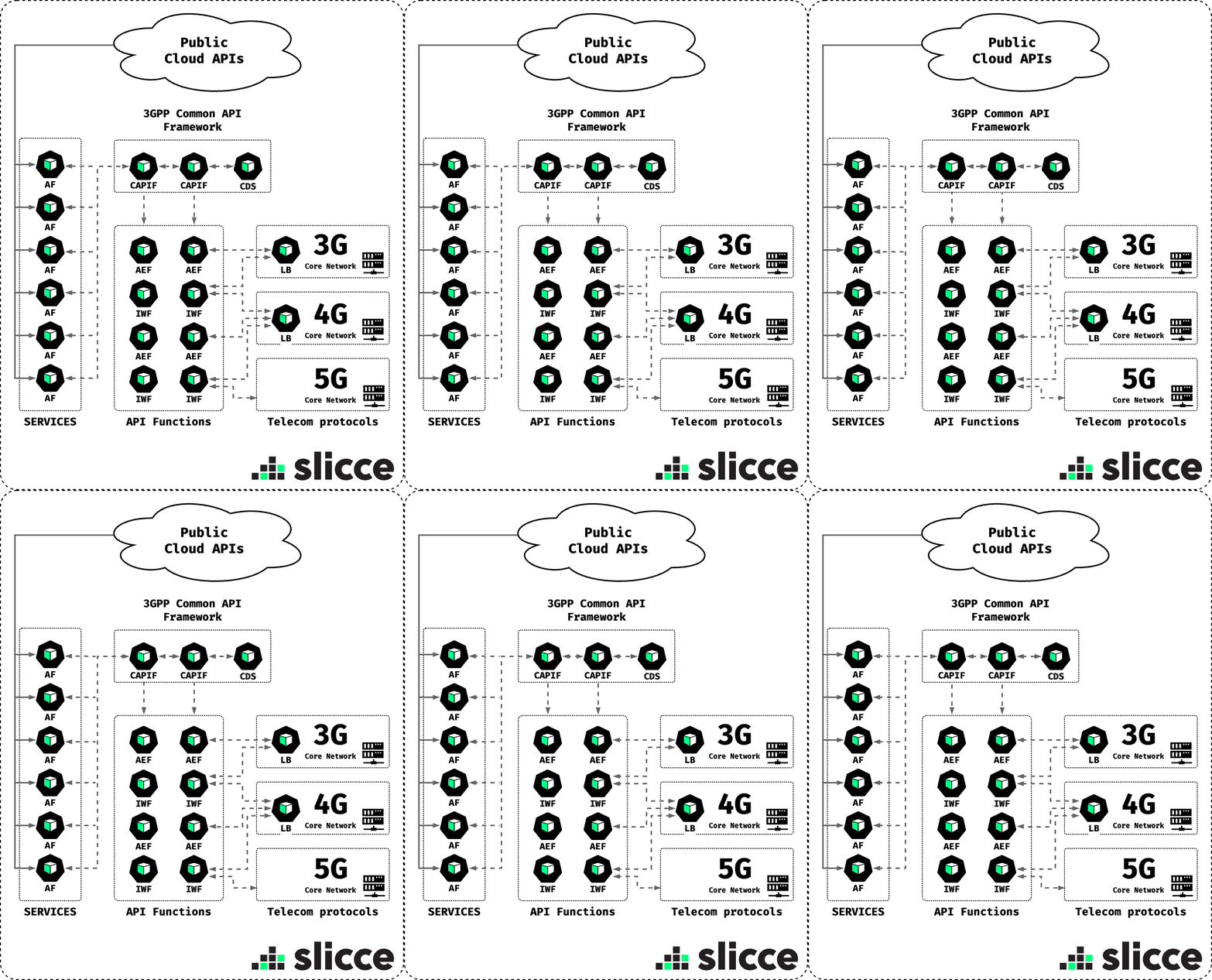
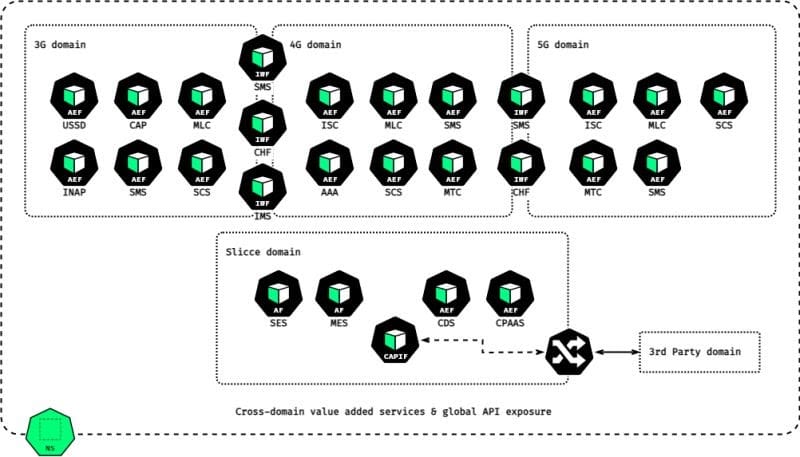
Slicce cloud-native microservices framework provides network functions through standardized APIs to those legacy environments, abstracting multiple network generations into a unified exposure layer that normalizes protocols and makes next-gen capabilities usable in a consistent way.
Our architecture integrates a complete API exposure stack:
CAPIF Core Function (aligned with NEF/3GPP standards) to handle service registration, discovery, and access control
Application Functions (AF) and API Exposure Functions (AEF) to publish, consume, and orchestrate network services across domains
Interworking Functions (IWF) to translate and bridge legacy protocols (Diameter, SIP, SS7) into modern API-based interactions
Telecom-optimized Load Balancers designed for low-latency signaling, high throughput, and carrier-grade resilience
APIs become the unifying control layer across heterogeneous core domains, abstracting differences between UMTS, EPC/IMS, and 5GC. Slicce delivers this capability through a cloud-native microservices framework that standardizes API lifecycle management, integrates with CI/CD toolchains for rapid deployment, and ensures interoperability across vendors and generations. With this foundation, operators can evolve networks incrementally, monetize existing assets, and accelerate the delivery of next-generation services across consumer, enterprise, and vertical markets.
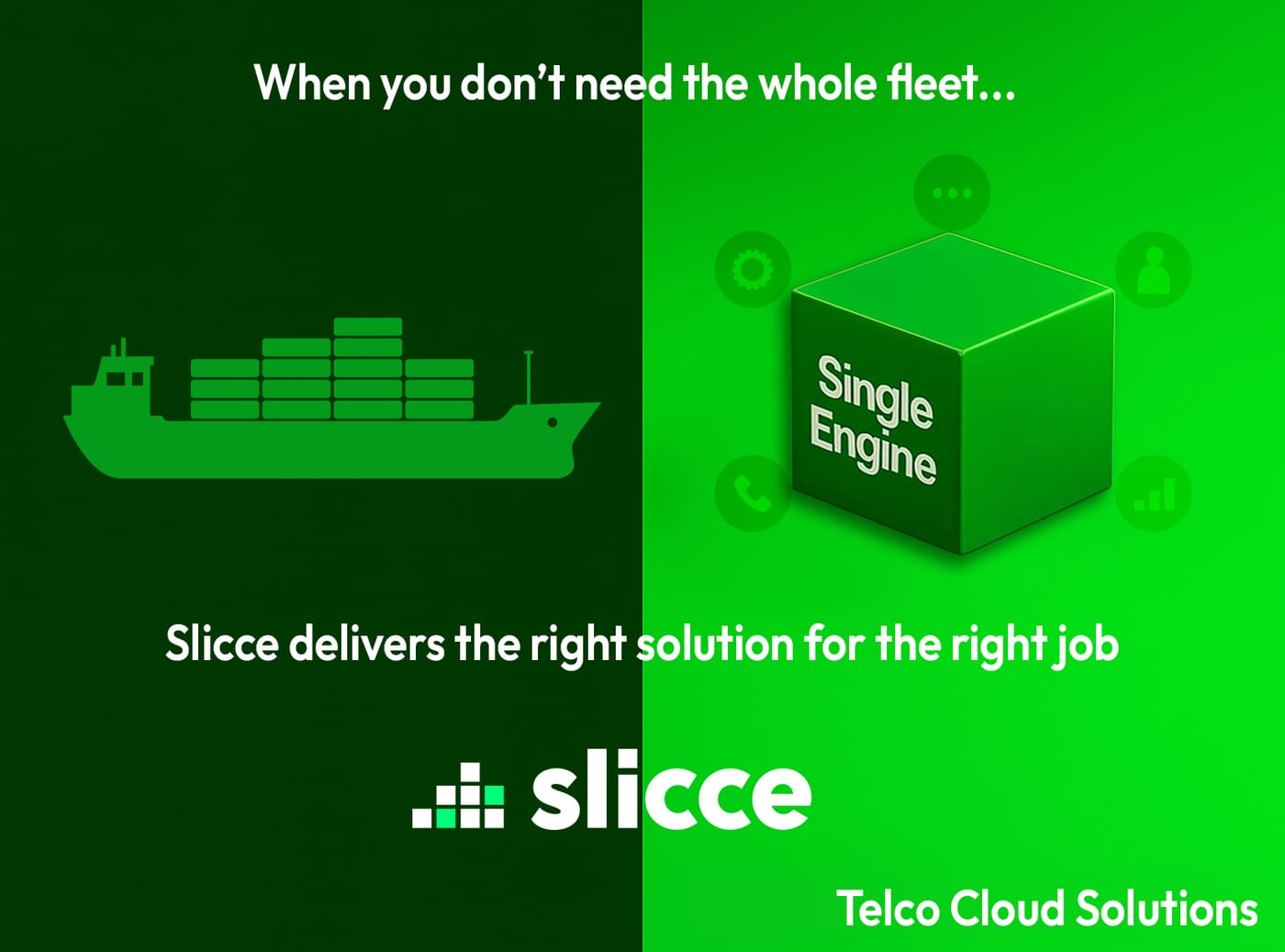
Single Engine vs Multi Engine: Your mission demands the right infrastructure.
In cloud infrastructure, architecture is a strategic decision. At Slicce, we believe in modularity. Our microservices are deployed in a way that aligns with the specific needs of…
August 21, 2025
In cloud infrastructure, architecture is a strategic decision. At Slicce, we believe in modularity. Our microservices are deployed in a way that aligns with the specific needs of any telecom operator, whether the focus is on simplicity, functional modularity, or long-term scalability.
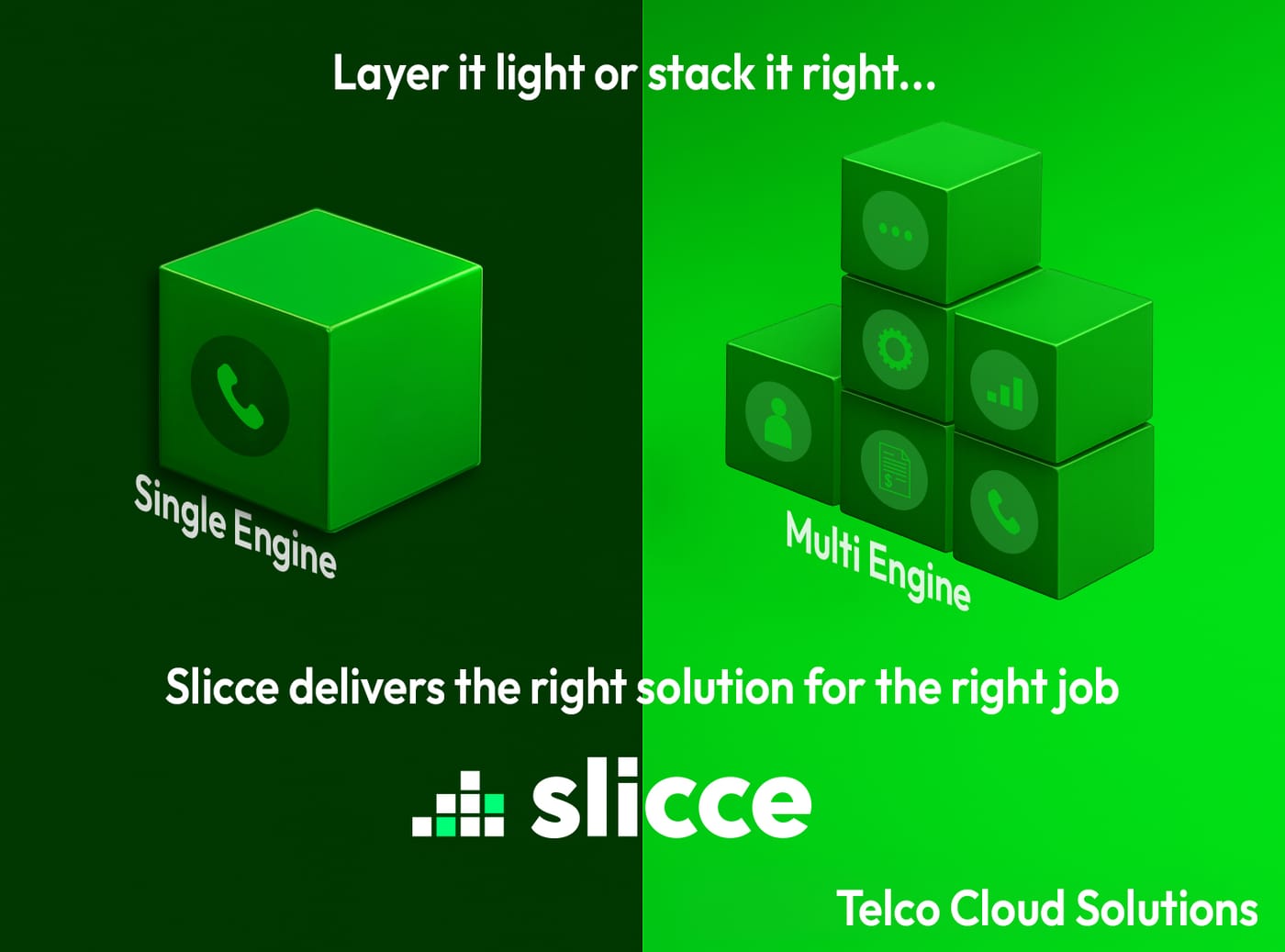
That's why we offer both cloud native micro-services as Single or Multi Communication Engines architectures.
The Slicce Single Engine approach Ideal for lean deployments - where simplicity and agility are mandatory - Slicce Single Engines are cloud native compact solutions, fast to deploy and easy to maintain. By consolidating functionality into a single runtime, their architecture eliminates stack sprawl friction and traditional deployment cycle delay, making them a powerful choice for operators looking for a speed to market and niche services monetization.
Slicce offers a multitude of single engines for call control, location, billing, analytics, media and much more fitting all network generations and protocols.
The Slicce Multi-Engine approach Ideal for large-scale, multi-domain environments - where separation of concerns, fault tolerance, and governance are critical - Slicce Multi Engines architectures support layered logic and redundancy, enabling each engine to specialize and evolve independently.
This way, telecom operators gain architectural control, scalability, and resilience, especially while managing diverse traffic types, regulatory constraints, or complex operational domains.
We've deployed Multi Engines cloud solutions in scenarios involving interworking gateways, load balancers, and protocol-specific micro-services, each engine operating autonomously yet cohesively within a broader service mesh.
Whether deploying a Single Engine to move fast or a Multi Engines solution to scale wide, we always ensure to offer a simple and smart process to deliver the best fit architecture. With Slicce team and Slicce technology, your growth unfolds without constraint.
Telecom software doesn't need to be overbuilt, when lightweight serves the goal.
At Slicce, we believe simplicity is a strength. And smart architecture powers efficient solutions. We've spent years mastering multi-engine telecom architectures—like exposing…
August 14, 2025
At Slicce, we believe simplicity is a strength. And smart architecture powers efficient solutions.
We've spent years mastering multi-engine telecom architectures—like exposing APIs across legacy and next-gen networks, building interworking gateways, and deploying telecom-aware load balancers. That depth of experience led us to build something leaner: a Single Engine solution that's modular, scalable, and tailored to real-world needs.
Each Slicce Communication Engine is a self-contained microservice, designed to handle a specific aspect of telecom logic and nothing more.
Deploy only what you need. Scale only what you use.
This approach lets us deliver solutions that are not only faster and easier to implement, but also more aligned with operational realities, especially for teams looking to avoid oversized, over-engineered platforms.
And because our architecture is purpose-built and lightweight, it naturally reduces infrastructure demands and operational overhead, giving our clients more room to innovate without inflating costs.
You're a Service Provider (MNO/MVNO) looking to extend your offering, accelerate deployment, or modernize your stack, our architecture adapts to your environment and your business model.
We've seen this resonate most with technical teams and decision-makers, those who value flexibility, clarity, and control. And for them, Slicce doesn't just simplify the process, it makes it more intuitive, more agile, and more sustainable.
- See how we implement the Single-Engine with a voicemail solution (https://www.slicce.co/use-cases/single-engine) in one of our use cases.
The Future of 5G: Revolutionizing Business Communication and Beyond
As the world continues to transition into an increasingly connected, digital landscape, 5G technology is poised to drive massive transformation across industries. From improving…
February 2, 2025
As the world continues to transition into an increasingly connected, digital landscape, 5G technology is poised to drive massive transformation across industries. From improving network speeds to enabling the Internet of Things (IoT), the rise of 5G will not only change how we connect to the internet but also how businesses operate, communicate, and innovate. But what does the future of 5G hold, and how will it impact businesses? Let's dive in.
What is 5G and Why is it Important?
5G is the fifth generation of mobile network technology, succeeding 4G LTE. It promises faster speeds, lower latency, and greater capacity, enabling businesses and consumers to enjoy a better, more efficient digital experience. With 5G, data transfer speeds are expected to reach up to 20 Gbps, which is up to 100 times faster than current 4G networks.
Beyond speed, 5G also brings a reduction in latency (the time it takes for data to travel between devices), improving the responsiveness of applications and services. Moreover, 5G networks can handle a significantly higher number of connected devices—making it the ideal infrastructure to support the growing IoT ecosystem.
How 5G Will Transform Business Communication
As businesses adapt to an increasingly digital world, 5G will become a key enabler of better business communication. Here's how:
1. Faster and More Reliable Connectivity — 5G promises enhanced connectivity, enabling businesses to ensure more reliable communication across their teams, customers, and partners. Whether it's for video conferencing, file sharing, or real-time collaboration, 5G will reduce delays and offer a consistent and high-quality experience, regardless of location.
2. Enabling IoT and Smart Devices — One of the most exciting aspects of 5G is its ability to connect a massive number of devices. From smart sensors to automated machinery and connected vehicles, 5G's low latency and high capacity will provide businesses with the ability to deploy more IoT solutions across their operations.
3. Enhanced Customer Experiences — 5G's ultra-low latency will significantly enhance real-time communication capabilities, offering new opportunities for businesses to engage with customers through AR or VR.
4. New Opportunities for Business Applications — The faster speeds and lower latency of 5G will open up new opportunities for business applications across healthcare, education, and logistics.
How Slicce Can Help Businesses Leverage 5G
At Slicce, we believe that the power of 5G will be a game-changer for businesses in terms of enhanced communication and digital transformation. With our cloud-based communications platform, businesses can tap into the power of next-gen technologies to stay ahead of the competition.
Adding a VoLTE service on top of the IMS core
VoLTE is a technology that allows voice calls to be carried over the LTE network, instead of using the legacy circuit-switched networks. VoLTE offers better voice quality, lower…
August 29, 2023
VoLTE is a technology that allows voice calls to be carried over the LTE network, instead of using the legacy circuit-switched networks. VoLTE offers better voice quality, lower latency, and more efficient use of network resources.
However, VoLTE also poses some challenges for service providers who want to offer value-added services, such as call forwarding, call waiting, conferencing, call screening, etc. These services require some intelligence and control in the network, which are not natively supported by the LTE architecture. This is where the ISC and the IFC come in.
The ISC is a logical interface that connects the IMS switching core to an Application Server (AS) to extend its capabilities as the IMS itself only provides a set of standardized service enablers, such as presence, messaging, and session control.
The IFC is a mechanism that defines how the IMS handles incoming and outgoing sessions for a given subscriber. The IFC specifies which AS should be invoked for a particular session, and what conditions should trigger the invocation.
By using the ISC interface and the IFCs, the VoLTE network can leverage the IMS capabilities to create additional services for voice calls. For example, when a VoLTE subscriber initiates a call, the IMS can use the IFC to determine which AS should be involved in the session.
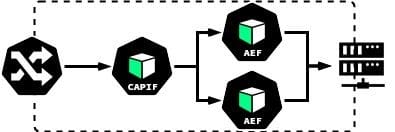
Slicce's ISC-AEF is a microservice that implements the ISC interface and provides a REST API for developing and deploying VAS applications. The ISC-AEF can be a part of a larger workload which could includes also CAPIF-CF and other API Exposure Functions to enrich application supports to various protocols, such as SIP, Diameter, HTTP, etc.
By using the IFCs and the Slicce ISC-AEF connected to the IMS core via ISC interface, service providers can create additional services for their VoLTE customers in a flexible and scalable way.
In conclusion, the ISC interface and the IFCs are key enablers for VAS in VoLTE networks. Slicce's ISC-AEF is a powerful tool for developing and deploying VAS applications using these interfaces.
The 3 Levels of Programmable Wireless
Programmable wireless is a technology that allows developers to create and manage cellular connections for their devices, applications, and services. One of the key aspects of…
August 25, 2023
Programmable wireless is a technology that allows developers to create and manage cellular connections for their devices, applications, and services.
One of the key aspects of programmable wireless connectivity is the ability to control the level of connectivity for each device or service.
Level 1: The SIM card — The lowest level, provides basic connectivity via SIM card, choice of operators and plans.
Level 2: The network — Allows developers to access and manipulate connection settings and data through APIs/SDKs: monitor status, usage, billing, analytics, SMS, voice, data roaming, geolocation.
Level 3: The platform — Comprehensive cloud-based infrastructure for provisioning, orchestration, security, scalability of connections at scale.
Now let's focus on Level 2 programmable wireless; because this level is about to be exploited in the future much more than it is today. Level 2 can be split into sub-levels:
Sub-level 2-1: BSS APIs for SIM activation, connection status, usage, billing and analytics.
Sub-level 2-2: Traditional Network APIs for SMS, call control or mobile location.
Sub-level 2-3: Advanced Network APIs from 4G for machine type communication (Non-IP Data Delivery, background data transfer, communication patterns control).
Sub-level 2-4: Latest 3GPP defined Network APIs available in 5G (or partially 4G) for eSIM swap, quality on demand, edge application management.
Operators already implemented sub-level 2-1 and 2-2, which became a commodity. The race is now around standardizing sub-level 2-4 across operators, and around individual operators differentiating their API offering.
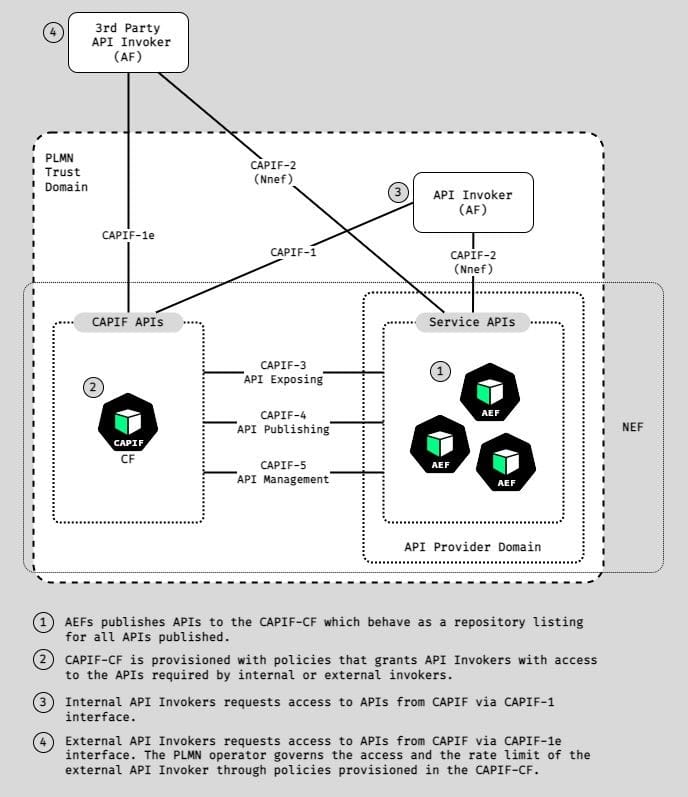
Allowing a 3rd party to publish APIs into an API Gateway where other 3rd parties consume APIs while managing rate limits, API access, real-time charging and secure operation is what Slicce CAPIF Core Function is about.
Read more on CAPIF Core Function page: https://www.slicce.co/products/capif-core-function
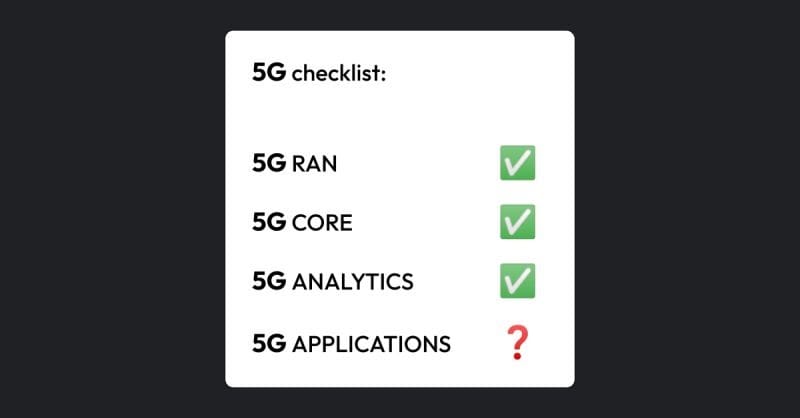
What are key challenges of the modern Telco in today's market dynamics after deploying 5G?
4 problem statements that Slicce is looking to address with its cloud communication foundation: 1. As an established operator, I have a lot of legacy services to migrate to modern…
August 16, 2023
4 problem statements that Slicce is looking to address with its cloud communication foundation:
1. As an established operator, I have a lot of legacy services to migrate to modern infrastructure with low budgets since investments are in 5G space.
2. As a fast growing virtual operator, I need to have a high level of agility to rapidly adapt to new customer requirements and win in a dynamic environment.
3. As an operator, acting in very competitive market, I need to create differentiation and added value to generate revenue streams on top of the connectivity ARPU.
4. As a modern business in the digital world, I need the ability to take control on devices and network to create services that bring smarter applications to the end customers.
While the industry focus on the last problem only through 3GPP Network Exposure Function, GSMA Open Gateway Initiative and CAMARA project, Slicce is looking at wider scope of the challenges the Telco has to go through, to optimize its costs and grow revenues.
The Programmable Network with 3GPP Common API Framework
An industry standard raised to harmonize all APIs in one common platform for authentication, authorization, accounting and security enforcements. While 5G Northbound APIs allows…
July 27, 2023
An industry standard raised to harmonize all APIs in one common platform for authentication, authorization, accounting and security enforcements.
While 5G Northbound APIs allows network APIs such as mobile location, device triggering, non-IP data delivery, private LAN, slice management, behavior analytics and more...
And while GSMA Open Gateway Initiative is looking to provide universal access to operator networks for SIM swap, quality on demand, OTP and simple edge discovery...
Slicce platform merge both API sets and add on top, the CPaaS common API set and the VoLTE common API set.
5G Northbound APIs
GSMA Open Gateway
Programmable Voice
Programmable SMS
Programmable VoLTE
Read about our CPaaS API Exposure Function here: https://www.slicce.co/products/api-exposure-functions/cross-domain/cpaas-aef
The 7 basics of API Exposure security embedded in Slicce Common API Framework Core Function
1. Application Level Firewall — Denial of service based on API logic. 2. Fail2ban — Denial of service for repetitive API requests of a same type. 3. Encryption — HTTP/2 with TLS…
July 23, 2023
1. Application Level Firewall — Denial of service based on API logic. 2. Fail2ban — Denial of service for repetitive API requests of a same type. 3. Encryption — HTTP/2 with TLS 1.3 encryption. 4. oAuth — Periodic Authentication with JSON Web Tokens (JWT). 5. Policy Control — Selective access to specific API sets. 6. Rate Limit — Restrict number of API calls/hour. 7. Audit trail — Analysis of audit log for potential anomalies.
The link between 5G and OTT services
Both OTT has been major disruptors of the mobile telecommunication market in the recent years. OTT services have challenged the traditional business models of mobile operators by…
July 20, 2023
Both OTT has been major disruptors of the mobile telecommunication market in the recent years. OTT services have challenged the traditional business models of mobile operators by offering a variety of communication and entertainment services that can be accessed over the internet. These have eroded the demand for traditional voice and messaging services, which have been the main source of revenue for mobile operators.
In another end, these OTT services creates more demand for internet data consumption and high end devices bringing mobile operators to invest more in network capacity and 5G. 5G, disrupting by its own the mobile telecommunication market bringing a technology that offers significantly faster speeds and lower latency than previous generations.
These 2 disruption factors are forcing mobile operators to adapt their business models and this disruption is still at its early stages. However, it is clear that mobile operators need to adapt their business models and to find new ways to generate revenue and reduce costs in order to remain competitive.
Once the mobile operators infrastructure is up-to-date with latest 5G infrastructure and basic connectivity services, it is time for these to come up with new services offering that can add value and generate revenues on top of the 5G connectivity service.
It is an opportunity for mobile operators to innovate and find new ways to serve their customers to adapt to the changing market, create differentiation and position for success in the future by leveraging 5G openness.
Slicce is an emerging company which has for mission "to empower telecommunication service providers with innovative self-contained lightweight cloud-native communications engines that enable them to monetize by creating value beyond standard connectivity."
How slicce business model is adapted to cloud business models?
Slicce business model is adapted to cloud business models by offering customers a flexible and cost-effective way to access and consume slicce network functions and services.…
July 17, 2023
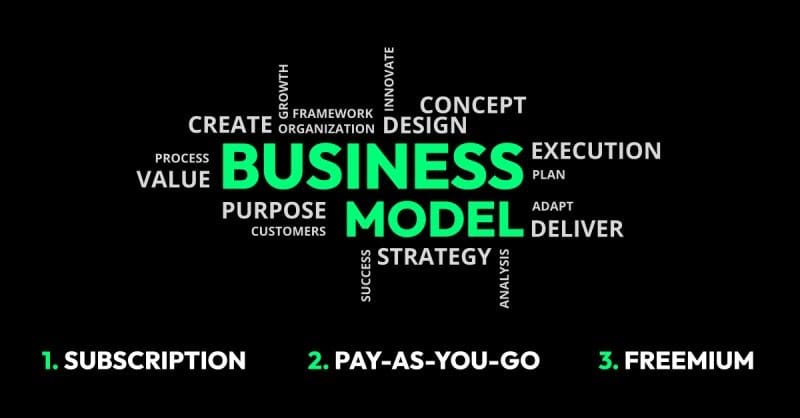
Slicce business model is adapted to cloud business models by offering customers a flexible and cost-effective way to access and consume slicce network functions and services. Customers can choose from different options depending on their needs and preferences:
Subscription: Customers can pay a fixed monthly or annual fee to access and use slicce communication engines and services. This option provides customers with predictable costs and unlimited usage within their subscription plan.
Pay-as-you-go: Customers can pay only for what they use based on the amount of resources consumed by slicce communications engines and services. This option provides customers with variable costs and flexibility to scale up or down as needed.
Freemium: Customers can access and use some of the basic features of slicce communications engines and services for free. This option provides customers with an opportunity to try out slicce before committing to a paid plan.
What are Self-contained Lightweight Cloud Communication Engines?
If you are looking for a way to improve your cloud communication capabilities, you might want to consider using self-contained lightweight cloud communication engines. These are…
July 11, 2023
If you are looking for a way to improve your cloud communication capabilities, you might want to consider using self-contained lightweight cloud communication engines. These are software components that enable you to create, manage, and scale cloud-based communication services without relying on external dependencies or complex infrastructure.
Self-contained lightweight cloud communication engines have several advantages over traditional cloud communication solutions:
They are easy to deploy and integrate with your existing applications and systems.
They are highly customizable and adaptable to your specific needs and preferences.
They are cost-effective and resource-efficient, as they only consume the resources they need and avoid unnecessary overhead.
They are reliable and resilient, as they can handle failures and errors gracefully and recover quickly.
They are secure and compliant, as they use encryption and authentication mechanisms to protect your data and privacy.
We split our cloud communication engines into 5 categories:
1. Core Functions: engines executing a stateless core function such as routing or authentication. 2. API Exposure Functions: engines terminating a telecom interface and exposing an OpenAPI for it such as SMS API, Call Control API or MTC API. 3. Interworking Functions: engines that converts one telecom interface to another to ease the integration of cross-generation network elements. 4. Telecom Load Balancers: engines that load balance telecom traffic within a kubernetes workload.
See our tech page here: https://www.slicce.co/technology
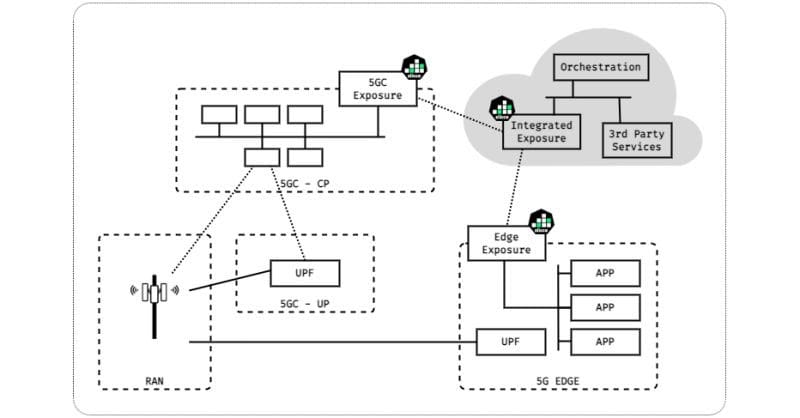
Network & Service exposure on 5G Edge
Mobile edge computing (MEC) is a paradigm that enables low-latency and high-bandwidth applications at the edge of the network, closer to the end users and devices. MEC can provide…
July 6, 2023
Mobile edge computing (MEC) is a paradigm that enables low-latency and high-bandwidth applications at the edge of the network, closer to the end users and devices. MEC can provide various benefits such as improved user experience, reduced network congestion, enhanced security and privacy, and new business opportunities. However, MEC also poses some challenges, especially in terms of network exposure and management.
Network exposure refers to the ability of network operators and service providers to expose their network capabilities and resources to third-party applications and services, in order to enable them to leverage the MEC infrastructure and offer value-added services to the end users. Network exposure can be achieved through standardized interfaces and protocols, such as 3GPP's Network Exposure Function (NEF) or ETSI's MEC Application Enablement Framework (AEF).
Network exposure on MEC can bring several advantages, such as: enabling dynamic and flexible service orchestration across multiple domains and stakeholders; enhancing the QoS and QoE of MEC applications; facilitating integration and interoperability of MEC with other technologies; supporting the development of innovative and customized MEC applications.
However, network exposure on MEC also entails some challenges, such as: ensuring security and privacy of exposed network data and resources; managing the complexity and diversity of the MEC ecosystem; balancing trade-offs between network performance and resource consumption, and between network control and openness.
Therefore, network exposure on MEC requires careful design and implementation, taking into account the technical, business, legal, ethical, and social aspects of the MEC environment. Network exposure on MEC is a key enabler for realizing the full potential of MEC as a platform for delivering innovative and user-centric applications and services at the edge of the network.
All eyes on CAMARA project API Families
CAMARA is a Linux Foundation project with the following objective: Telco network capabilities exposed through APIs provide a large benefit for customers. By simplifying telco…
July 2, 2023
CAMARA is a Linux Foundation project with the following objective: Telco network capabilities exposed through APIs provide a large benefit for customers. By simplifying telco network complexity with APIs and making the APIs available across telco networks and countries, CAMARA enables easy and seamless access.
Here is a summary of the exposed APIs (at least as planned for now...):
CarrierBillingCheckOut API family — Provides functionality for enabling first the purchase and then the payment request against OB Carrier Billing Systems.
QualityOnDemand API family — Sets quality for a mobile connection (e.g. required latency, jitter, bit rate).
Blockchain Public Address API family — Manage a Blockchain Public Address associated to a phone number, used as Decentralized Identifier (DID).
DeviceStatus API family — Check if a device is losing connection to the network or gets reachable again, and the roaming status.
NumberVerification API family — Verify the phone number associated with the SIM used in the device connected to the mobile data network.
DeviceLocation API family — Provides the customer with the ability to check the location of a device.
EdgeCloud API family — Provide and manage application images deployed on operator network resources, and influence traffic routing toward Edge instances.
Does CAMARA project meet its objectives? While EdgeCloud API family sounds exciting to Edge application vendors, the other API families are quite limited. At Slicce, we want to provide all the tools to support innovation, that's why we work to enrich our API portfolio every day, leaving the liberty to manage API exposure and let application developers create new applications with a richer set of APIs.
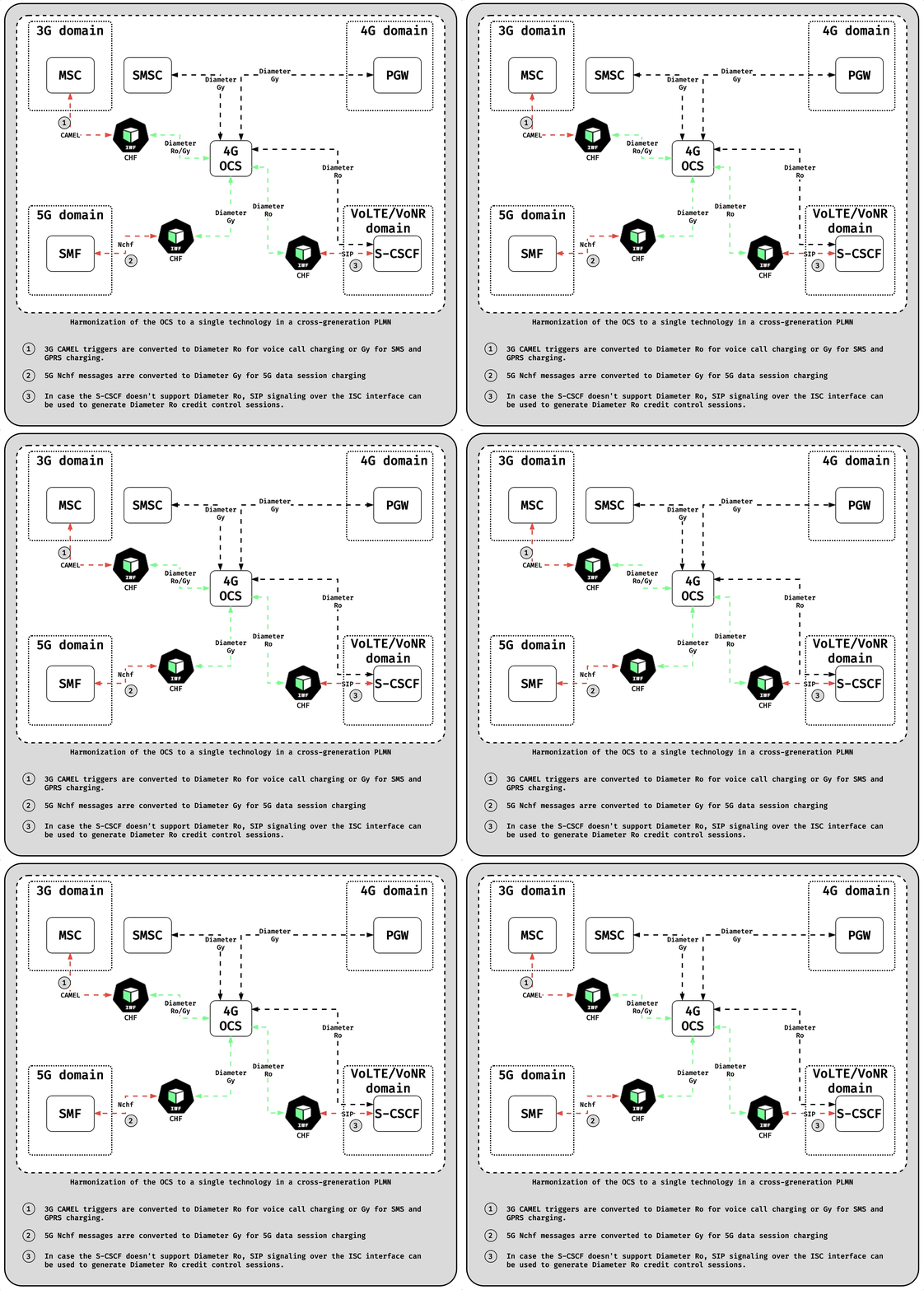
Harmonization of 4G OCS with 3G and 5G cores
Replacing a telecom online charging system (OCS) is a painful process that involves many challenges and risks. An OCS is a complex system that handles the real-time billing and…
June 23, 2023
Replacing a telecom online charging system (OCS) is a painful process that involves many challenges and risks. An OCS is a complex system that handles the real-time billing and charging of telecom services, such as voice calls, data usage, SMS, roaming, etc. It interacts with many other systems, such as network elements, CRM, provisioning, mediation, rating, etc.
Replacing an OCS requires careful planning and execution of several steps: analyzing the current OCS architecture; selecting a new OCS vendor and solution; designing and testing integration with existing systems; migrating existing data and configuration; training staff and customers; monitoring and troubleshooting during and after launch.
Each of these steps can pose significant challenges and risks: compatibility issues between old and new OCS systems; data loss or corruption during migration; performance degradation or service disruption; customer dissatisfaction due to billing changes; regulatory compliance issues; cost overruns or delays.
Therefore, replacing an OCS is a painful process that requires a lot of time, resources, and expertise. It should only be done when there is a clear business case and a well-defined strategy for minimizing the risks. Making use of the charging interworking function (CHF-IWF) represents considerable cost and time savings and allows network operators to evolve their network cores without carrying the costs of implementing a new billing solution.
Self-healing hooks in slicce cloud communication engine foundation
One of the main challenges of 5G networks is to provide reliable and continuous service in a complex and heterogeneous environment. To achieve this, 5G networks need to have…
June 15, 2023
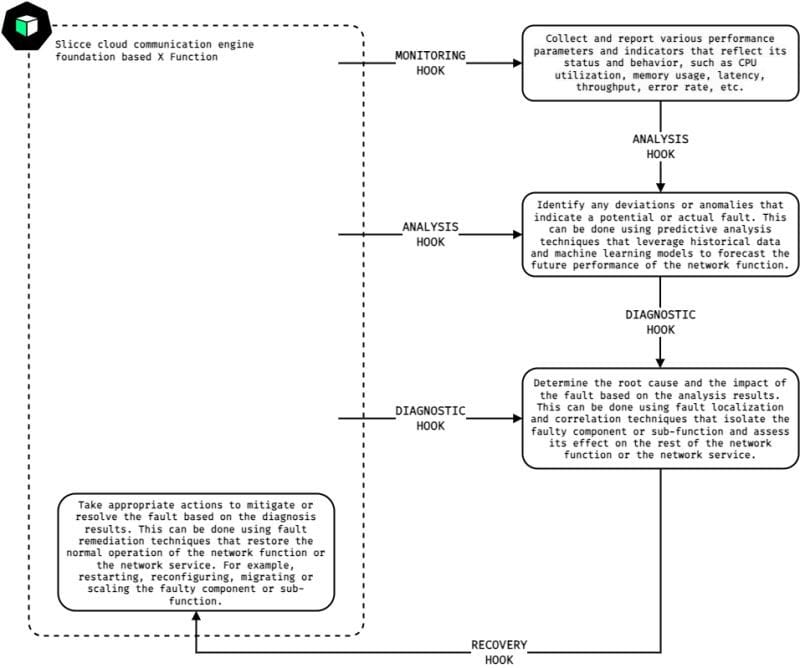
One of the main challenges of 5G networks is to provide reliable and continuous service in a complex and heterogeneous environment. To achieve this, 5G networks need to have self-healing capability, which is the ability to detect, diagnose and recover from faults or anomalies automatically. Self-healing capability can improve the network performance, availability and resilience, as well as reduce the operational costs and human intervention.
To enable self-healing capability for a network or application function, slicce cloud communication engine foundation includes native implementations of Self-healing hooks. The hooks allow extending the microservice capabilities to heal itself.
API monetization models with 3GPP Common API Framework
There are different types of API monetization models, such as direct, indirect, or hybrid models. Direct models charge for API access, while indirect models use APIs to create…
June 6, 2023
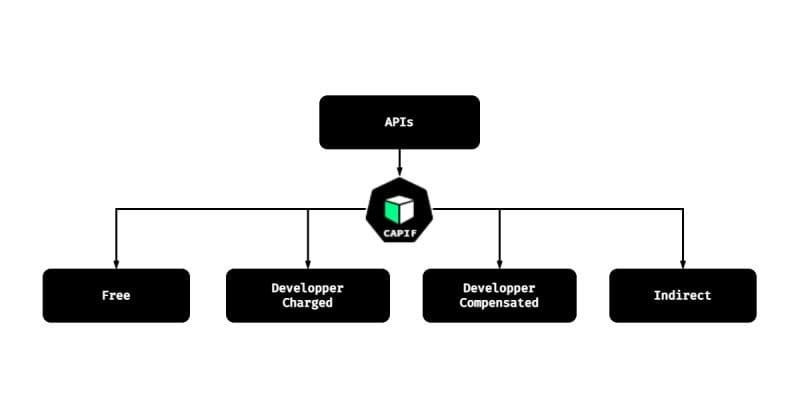
There are different types of API monetization models, such as direct, indirect, or hybrid models. Direct models charge for API access, while indirect models use APIs to create value for other products or services. Hybrid models combine elements of both direct and indirect models.
One example of a hybrid API monetization model is the 3GPP Common API Framework (CAPIF). CAPIF is a standard that defines how telecom operators can expose their network capabilities via APIs to third-party service providers. CAPIF enables operators to offer different levels of service quality, security, and charging options for their APIs. CAPIF also allows operators to share revenue with service providers based on the usage of their APIs.
CAPIF is a way for operators to leverage their network assets and create new revenue streams by partnering with service providers who can offer innovative and customized services to end-users. CAPIF also benefits service providers by giving them access to network features that can enhance their service quality and user experience.
5G developers can rely on Slicce cloud communication engine foundation
5G developers can rely on Slicce cloud communication engine foundation to rapidly deploy innovative 5G Application Functions. Slicce is a powerful and flexible platform that…
June 1, 2023
5G developers can rely on Slicce cloud communication engine foundation to rapidly deploy innovative 5G Application Functions.
Slicce is a powerful and flexible platform that enables 5G developers to create and manage 5G Application Functions with ease and efficiency. Slicce provides a rich set of features, such as scalability, security, reliability, and interoperability, that are essential for 5G applications. With Slicce, 5G developers can focus on their core business logic and deliver high-quality 5G services to their customers.
The 3GPP Common API Framework Core Function
The Common API Framework Core Function is an element defined by 3GPP to harmonize all aspects of northbound service APIs. It covers functionality related to on-board and off-board…
May 24, 2023
The Common API Framework Core Function is an element defined by 3GPP to harmonize all aspects of northbound service APIs. It covers functionality related to on-board and off-board API invokers, APIs that need to be exposed for registration and release, API discovery by third-party entities, and authorization and authentication. See how Self-Contained Lightweight Cloud Communication Engines can be used as API Exposure Functions inside our outside the PLMN domain. Read more here: https://www.slicce.co/use-cases/3rd-party-api-exposure
Mobile Value-Added Services cost cut
Cutting the capital and operational expenses of Mobile Value-Added Services by 50% is possible by leveraging cloud computing and 5G technologies to reduce infrastructure and…
May 15, 2023
Cutting the capital and operational expenses of Mobile Value-Added Services by 50% is possible by leveraging cloud computing and 5G technologies to reduce infrastructure and improve service quality and performance.
See how we unified Mobile VAS across network generations and ensure lower costs using a microservice architecture here: https://www.slicce.co/use-cases/value-added-services
5G Northbound APIs and Machine Type Communications
So, where are we with 5G Northbound APIs and Machine Type Communications? 5G is not only about faster and more reliable connectivity for mobile devices. It also enables new…
May 9, 2023
So, where are we with 5G Northbound APIs and Machine Type Communications?
5G is not only about faster and more reliable connectivity for mobile devices. It also enables new applications and services that require low latency, high reliability, and massive scalability. One of these applications is Machine Type Communications (MTC), which refers to the communication between machines or devices without human intervention.
MTC can be used for various purposes, such as smart metering, industrial automation, smart agriculture, and vehicular communication. However, to realize the full potential of MTC, there is a need for a standardized and interoperable interface between the network and the applications. This interface is called the Northbound Application Programming Interface (NAPI), which allows applications to access network resources and capabilities in a flexible and efficient way.
The NAPI is one of the key features of 5G that differentiates it from previous generations of mobile networks. It enables network slicing, which is the ability to create multiple virtual networks with different characteristics and service levels on top of a common physical infrastructure.
According to a recent report by Markets&Markets, the global market for 5G NAPIs is expected to grow from USD 189 million in 2020 to USD 2,734 million by 2026, at a CAGR of 56.1%. Main growth drivers: increasing demand for MTC applications in manufacturing, energy, transportation, healthcare, agriculture; need for network automation; emergence of new business models and revenue streams.
But what about the security and privacy risks associated with exposing network data and capabilities to third-party applications? See how Slicce's CAPIF Core Function addresses these risks and allows adoption of cloud-native and microservices-based architectures.
How Network Exposure Leads to Innovation
In today's competitive and dynamic world, innovation is essential for any organization that wants to survive and thrive. Innovation is the process of creating new and better…
April 27, 2023
In today's competitive and dynamic world, innovation is essential for any organization that wants to survive and thrive. Innovation is the process of creating new and better products, services, processes, or business models that meet the needs and expectations of customers and stakeholders.
But how can organizations foster a culture of innovation? One of the key factors that influences innovation is network exposure. Network exposure refers to the extent to which an organization or an individual is connected to and interacts with diverse and relevant sources of information, knowledge, ideas, and feedback.
Network exposure can lead to innovation in several ways. First, it can increase the variety and quality of inputs for innovation. Second, it can enhance the evaluation and refinement of ideas for innovation. Third, it can facilitate the implementation and diffusion of innovation.
Therefore, network exposure is a vital factor that can foster a culture of innovation in any organization or individual. By expanding and diversifying their network exposure, organizations and individuals can enhance their creativity, learning, problem-solving, and performance.
Slicce is launched
We are excited to introduce Slicce; Self-contained Lightweight Cloud Communication Engines. A platform that enables you to create and deploy microservices for telecom core network…
April 18, 2023
We are excited to introduce Slicce; Self-contained Lightweight Cloud Communication Engines. A platform that enables you to create and deploy microservices for telecom core network applications. Slicce's communication engines are scalable, secure, and easy to use. You can either use them individually or combine them with others in a workload. Slicce's communication engines can help you achieve faster time-to-market, lower operational costs, and better customer experience.
Want to discuss a post? Our team is one message away.
Message sent.
Thanks for reaching out — we'll be in touch shortly.
We value your privacy
With your consent, we use Google Analytics cookies to understand how our website is used. Strictly necessary storage only remembers your choice. Read our privacy policy.